
Selling to People Who Aren’t Hungry: GLP-1s Hit Food and Apparel in Opposite Directions
Inside a test kitchen in Omaha, Conagra executives huddled over plastic trays of microwaved eggs, potatoes and sausage, lifting packets of cheese sauce and pouring out slow orange ribbons. Nobody had tasted anything yet. That was the point. Ashley Lind, who heads behavior science at Conagra, was studying the bowl to answer one question: would this look satisfying to someone who does not want to eat?
Two articles from the past two weeks show what GLP-1 drugs are doing to consumer markets, and they point in opposite directions. See “Big Food’s Biggest Challenge: People Who Don’t Want to Eat Anymore” (The Wall Street Journal, August 18, 2026) and “GLP-1 users much more likely to increase clothing spending” (Retail Brew, August 26, 2026).
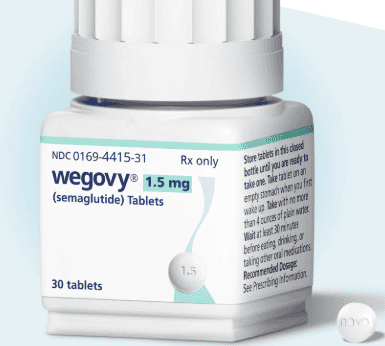
For food companies, demand is in decline. Morgan Stanley projects 55 million Americans on GLP-1s by 2035. KPMG estimates current users eat about a fifth fewer calories. JPMorgan puts the hit to food and beverage revenue at $30 to $55 billion a year as soon as 2030. The drugs also change taste. “It almost felt like I was eating Styrofoam,” Pennsylvania food broker Brian Merwin said of his first months on Wegovy. Fat, salt, sugar, bold spice — the industry’s entire playbook — now works against the customer. Conagra’s answer is smaller portions of familiar, nostalgic food with much more protein: a buffalo mac and cheese with 40 grams, a Duncan Hines brownie mix with a cup of blended cottage cheese stirred in. General Mills quizzes an AI persona named “Lisa” in place of focus groups and is testing a protein bar under a new brand, Prot Edge.
For apparel, demand is rising but unstable. Tinuiti found 40% of GLP-1 users who have lost weight plan to spend more on clothing next year, against 25% of shoppers overall. They also resell more, rent more (25% versus 12% for services like Rent the Runway), and plan to use Stitch Fix at twice the rate. And 65% buy multiple sizes intending to return what does not fit, more than double everyone else. As Tinuiti’s Andy Taylor put it, these shoppers “may still be in flux and not necessarily know where their ultimate weight might land.”
The same drug class is draining one industry’s revenue while filling another’s returns pile.
Claude was used to write a first draft of this blog post.
Relevant Chapters in Essentials of Marketing
Chapter 3 (evaluating opportunities in the changing market environment) fits these articles. The chapter’s core lesson is that managers cannot control the external environment but must watch trends in it, because those trends both destroy old opportunities and create new ones. A diabetes drug approved in 2005 is now forcing Conagra to reformulate frozen dinners and giving Rent the Runway a new customer. Neither company had any say in it.
Chapter 4 (segmentation and positioning) is the second connection, and the more interesting one. Conagra has decided GLP-1 users are not yet a segment worth a dedicated product line, folding their needs into the larger health-conscious market instead — a textbook judgment about whether a submarket is substantial enough to justify its own marketing mix. Kraft Heinz went the other way, naming a “GLP-1 adjacent” group of household members who cook for a user.
There is also a tie to Chapter 9 (product management and new-product development). Most of what the article describes is product modification rather than genuinely new products — more protein, smaller portions, a “GLP-1 Friendly” badge on Healthy Choice. The scrapped high-protein burrito, killed because the tortilla could not hold the filling, is a good example of an idea dying in development.
Two other connections are worth noting: Chapter 7 (marketing information), for Conagra abandoning focus groups and General Mills replacing them with an AI persona, and Chapter 12 (retailing), for the bracketing and returns problem the apparel article describes.
Class Discussion Ideas
The useful angle here is that one environmental change hits two industries in opposite directions. Food companies are trying to sell more to people who want less; apparel retailers are trying to sell to people whose size keeps moving. Both sets of activities below ask students to trace a single uncontrollable trend through to specific marketing mix decisions, and to decide when a trend is big enough to build a strategy around.
In-Class Activities
- Two Industries, One Trend. Split the class in half. Assign one half a packaged-food company and the other half an apparel retailer, then give every group the same fact: one in five U.S. households now includes a GLP-1 user. Each group lists three specific changes to its firm’s marketing mix and identifies which of the 4 Ps changes most. Debrief by comparing the two halves side by side. (Chapter 3)
- Segment or Not? Set up a debate between two teams. One argues Conagra should launch a dedicated GLP-1 brand now; the other argues it should keep folding those needs into Healthy Choice and its broader health-conscious line. Require each team to argue on segment size, measurability, and whether the group needs a genuinely different marketing mix. Close by asking the class which side made the stronger case and why. (Chapter 4)
- Kill the Burrito. Working in pairs, students generate three product ideas aimed at GLP-1 users, then trade ideas with another pair. The receiving pair applies screening criteria — fit with company resources, likely demand, whether it can actually be made — and kills at least one, explaining the reasoning to the class. Point them at the real burrito prototype Conagra scrapped. (Chapter 9)
- The Returns Desk. Role-play a meeting at an apparel chain where 65% of a growing customer group buys multiple sizes planning to return most of them. Assign roles: store operations, e-commerce, merchandising, finance. The group must produce one recommendation that keeps these shoppers without absorbing the return costs, and defend it against the other roles’ objections. (Chapter 12)
Discussion Questions (and Answer Ideas)
- Which parts of the external market environment does the rise of GLP-1s represent? (Chapter 3)
- Answer: Primarily technological, since the drugs are a pharmaceutical innovation, but the sociocultural and economic dimensions matter just as much — health norms are shifting, and expanding insurance coverage plus cheaper pill versions change who can afford them. The point students should reach is that a single change can move several environmental variables at once, and that Conagra could not have prevented any of it. The chapter’s advice is to watch trends rather than only current conditions, which is exactly what Conagra’s 2028 product planning is doing.
- Conagra says GLP-1 users are not yet driving enough demand to justify GLP-1-specific products. Is that a defensible segmentation decision? (Chapter 4)
- Answer: It is defensible on the chapter’s own criteria. A useful segment has to be substantial and needs a marketing mix different enough to be worth the cost of serving it separately — and if GLP-1 users mostly want what health-conscious buyers already want, a separate line adds cost without adding much. Students may reasonably argue the other side: PwC’s one-in-five-households figure doubled in about a year, and being early can build the position before competitors arrive. Both answers are strong if they argue from segment size and mix difference rather than from gut feel.
- Are Conagra’s changes new products or product modifications, and does the distinction matter? (Chapter 9)
- Answer: Adding protein to mac and cheese, shrinking portions, and stamping a “GLP-1 Friendly” badge on Healthy Choice are modifications to existing products; General Mills’ Prot Edge protein bar under a new brand name is closer to a new product. The distinction matters because it changes the risk, the cost, and the development process. Modifications lean on existing brand equity and distribution; a new brand has to build both.
- General Mills quizzes an AI persona named “Lisa” rather than running focus groups, and Conagra dropped focus groups after products tested well but flopped in stores. What does Chapter 7 say about that trade-off? (Chapter 7)
- Answer: Chapter 7 treats marketing research as a process for reducing uncertainty in a decision, and warns that data quality determines decision quality. Conagra’s complaint is a validity problem — focus group participants behaved differently than real shoppers. But “Lisa” is built from past data, so she can only reflect what users have already said and done, and she cannot surprise anyone. Students should see that replacing a flawed method with a faster one does not automatically make the information better.
- The apparel numbers come from surveys by Tinuiti and ReturnPro, both firms that sell services to retailers. How much should that affect how we read them? (Chapter 7)
- Answer: Quite a bit, and this is worth slowing down on. The figures measure stated intentions, not behavior — “plan to spend more” is not the same as spending more — and the sponsoring firms have an interest in the finding being dramatic. The 1,000-shopper sample is reasonable, but the GLP-1 subgroup within it is much smaller than that. The finding is plausible; the precision is not.
- GLP-1 users report shopping more at off-price retailers like TJ Maxx and are more likely to shop in physical stores because of fit uncertainty. What does that suggest about retail strategy? (Chapter 12)
- Answer: Chapter 12 links a retailer’s strategy to the kind of shopping the customer is doing. Someone whose size will change in three months has little reason to pay full price and a strong reason to try things on, which favors off-price chains and stores over online. It also cuts against the last decade’s push toward e-commerce for apparel, and gives store-based retailers a genuine advantage for once.
- Pick an industry neither article covers and predict how GLP-1 adoption changes it. (Chapter 3)
- Answer: Open by design. Restaurants, alcohol, airlines, fitness, and health insurance are all reasonable choices with real arguments behind them. Strong answers name a specific marketing mix element that would have to change and say what evidence would confirm or disconfirm the prediction. Push students who only claim “sales go down” to say whose sales, through which channel, and how fast.