
Twelve Generations for One Tomato: How the Produce Aisle Got Honeycrisp-ified
The NPR Planet Money podcast fell off my regular rotation. Then, I saw this one and gave it a listen. It’s a great fit for a marketing class – connecting to several chapters. I then looked back and found some other podcasts you might find helpful. Look for those.
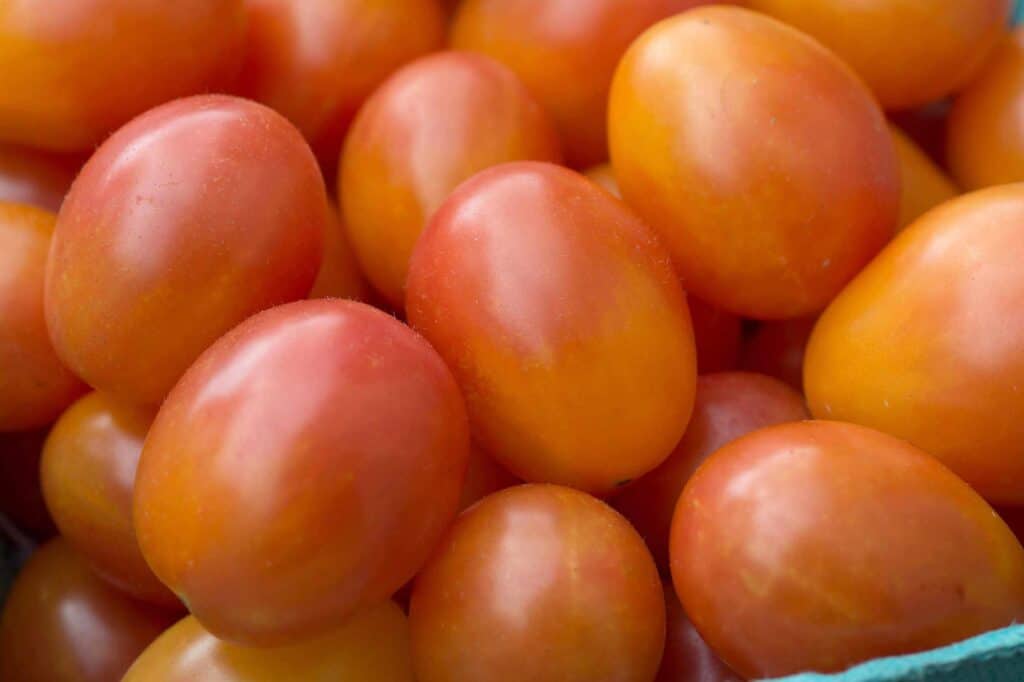
In 2011, a Rutgers researcher noticed a single cherry tomato growing in a field on the university’s experimental farm. It was called Isis Candy, it tasted sweet, and it had an unusual look — a red blush over a yellow background. It also cracked, which makes a tomato nearly impossible to ship. Fifteen years and twelve breeding generations later, that observation is a trademarked tomato called the Scarlet Sunrise. Planet Money went to New Jersey to watch it get eaten (“Branded fruit: How produce got ‘Honeycrisp-ified,’” NPR Planet Money Podcast, August 28, 2026; a full transcript is posted with the episode), and the trip turns into a clear explanation of why your produce aisle now has superstars in it.
Two laws did most of the work. On Christmas Eve 1970, Richard Nixon signed the Plant Variety Protection Act, which for the first time let breeders own the rights to new crop plants. Ten years later the Bayh-Dole Act gave federally funded researchers the default right to own what they invent with that funding — which meant public universities could suddenly monetize their medical devices, their semiconductors, and their fruit. The payoff arrived in 1991, when the University of Minnesota released the Honeycrisp apple and licensed the trees to growers for about a dollar apiece. Minnesota has since made north of $20 million on it. Washington State University’s Cosmic Crisp did better than $30 million. A new apple had become a profit center for a school.
Cornell agricultural economist Miguel Gomez says the result is a race for differentiation in every fresh produce category, driven by growers trying to escape the commodity trap — the pit where a soybean is a soybean and the only way to compete is to charge less. Escape routes run from cheap to expensive. Love Beets sells ordinary beets with no proprietary genetics at all, just careful selection, good packaging, and a brand. The Scarlet Sunrise took the other route: real genetic difference, legally protected. Gomez thinks apples are already past saturation, and warns about what he calls the cost of searching for consumers — when there are too many options, choosing becomes a burden. He also thinks marketers have the causation backward. The variety is a response to what consumers want, he argues, not the other way around.
Claude was used to generate a first draft of this blog post.
Relevant Chapters in Essentials of Marketing
Chapter 9 (product management and new-product development) is the primary anchor, because the episode narrates the chapter’s five-step process from the inside, out loud, by the people who did it. Idea generation was a researcher noticing one odd plant in a field. Screening and idea evaluation came when the breeders decided the fix was to cross that sweet, cracking cherry with a hardier red grape tomato — trading some flavor for the firmness a shipped product requires. Development was twelve generations over roughly six years, doubled up in a greenhouse to squeeze two growing seasons into each year. Commercialization was the 2019 phone call handing the plant to Rutgers’ research office for trademarking and a marketing plan. Students rarely get to see all five steps in one story, and almost never with the failure rate visible: the breeders taste constantly and expect nearly every plant to be wrong.
Chapter 8 (elements of product planning for goods and services) is the second anchor, and it explains a decision the breeders made years before the tomato had a name. Chapter 8 defines branding as the use of a name, term, symbol, or design — or a combination of these — to identify a product. The bicolor look was that design decision. In the breeders’ own words, they figured people could identify it in the marketplace, connect the flavor with the appearance, and come back for that specific product.
Chapter 3 (evaluating opportunities in the changing market environment) is the third connection, and this is the rare case that makes the political and legal environment concrete. Chapter 3 groups the external market environment into economic, technological, political and legal, and cultural and social areas, and calls them uncontrollable variables — a manager cannot alter them, but should analyze them to make better decisions. Two laws that drew almost no coverage at the time reshaped an entire industry’s opportunities for the next fifty years. Chapter 3’s four competitive situations sharpen it further: the commodity trap is a plain-language description of pure competition, and the whole point of a protected, branded variety is to move out of it toward monopolistic competition, where a firm has some control over its own price.
Class Discussion Ideas
Chapter 9’s new-product development process usually gets taught as a flowchart, and students accept it without much friction because nothing in it is hard to believe. This episode is useful precisely because it is messy: the idea came from noticing rather than brainstorming, the timeline ran fifteen years, and the most valuable discovery was an accident nobody was looking for. Run the class on the gap between the diagram and the field.
In-Class Activities
Walk the Five Steps. In small groups, have students place each event in the episode into Chapter 9’s five stages — idea generation, screening, idea evaluation, development, commercialization — and then flag the parts that do not fit cleanly. Ask each group to report one place where reality was messier than the model. (Chapter 9)
Brand a Commodity. Teams pick a genuine commodity from the produce section — russet potatoes, carrots, yellow onions, cucumbers — and run the Love Beets play: no new genetics allowed, only a brand name, a package, and one visual identifier a shopper could recognize from six feet away. Each team pitches, and the class votes on which one they would actually pay more for. (Chapter 8)
Uncontrollable Variables. Give groups the two laws and have your students work out who gained and who lost from each — university breeders, seed companies, large growers, small farmers, consumers. Then ask each group to name one legal or technological change happening now that could reshape a different industry the same way. (Chapter 3)
Pick the Next One. The hosts ask what produce category becomes the next apple. In teams, students choose a category, argue whether it sits before or after Gomez’s saturation point, and specify the one trait a new entrant would need to differentiate on. Requiring a single trait forces a real positioning decision rather than a wish list. (Chapter 9)
Discussion Questions
- Trace the Scarlet Sunrise through Chapter 9’s five steps of new-product development. Where does the real story not match the model? (Chapter 9)
- Answer: The five steps are all there — a researcher noticing Isis Candy in a field, deciding a cross with a hardy red grape could fix the cracking, twelve generations of breeding and selection, and the 2019 handoff to Rutgers for trademarking and marketing. Students should notice at least two mismatches. Idea generation was passive observation rather than a deliberate search, and the stages overlap rather than proceeding in order: the breeders were screening and evaluating continuously, tasting as they went. The timeline is the other shock. Fifteen years is not what a five-box diagram suggests.
- While developing Scarlet Sunrise, the breeders noticed a plant half the normal size that produced comparable fruit — a discovery they were more excited about than the tomato, since it could cut growing costs an estimated 25 to 50 percent. What does that suggest about idea generation? (Chapter 9)
- Answer: Chapter 9 treats idea generation as step one, but the most commercially significant idea here was generated in the middle of step four, by people looking for something else. Grape tomatoes are expensive largely because tall plants ripen unevenly and have to be hand-picked over several passes; a compact plant with a shorter ripening window changes that math. The transferable lesson is that development work generates ideas as a byproduct, and a firm that treats idea generation as a one-time phase will miss them. Students might also note that this discovery helps growers rather than consumers, and would never show up on a package.
- The breeders chose the red-on-yellow bicolor look years before the tomato had a name. Using Chapter 8, explain what kind of decision that was. (Chapter 8)
- Answer: It was a branding decision. Chapter 8 defines branding as the use of a name, term, symbol, or design — or a combination — to identify a product, and here the design carries the identification before any name exists. The breeders said so directly: they wanted customers to connect the flavor with the appearance and buy that specific product again. Chapter 8 notes that brand recognition is worth more when many unknown brands crowd a market, and the red grape tomato bin is exactly that. Strong answers will see that the appearance is doing the work a brand name usually does, because produce is often sold loose and unlabeled.
- Love Beets sells beets with no proprietary genetics — just selection, packaging, and branding — and charges more. Can that hold? (Chapter 8)
- Answer: Genuinely arguable, and worth letting students disagree. Is this a sustainable competitive advantage? The case for: Chapter 8’s brand familiarity levels do not require a physical product difference, and consistency, uniform size, and reliable quality are real benefits a shopper can feel. The case against: with no legal protection on the genetics, any competitor can copy the whole strategy, so the advantage rests entirely on getting there first and staying better known. Push students to name what Love Beets actually owns. The answer is the brand and the customer’s memory of it, which is precisely Chapter 8’s point about why firms brand at all.
- Chapter 3 calls the political and legal environment an uncontrollable variable. How did two laws create the produce aisle we shop in now? (Chapter 3)
- Answer: The Plant Variety Protection Act let breeders own rights to new crop varieties, which made investing in one worth something. Bayh-Dole let federally funded researchers own what they invent, which turned university agriculture programs into potential profit centers — the Honeycrisp earned Minnesota north of $20 million. Neither law was aimed at grocery shelves, and neither drew much attention at the time. That is the chapter’s point about uncontrollable variables: a manager cannot change them, but a manager who reads them early sees opportunities before competitors do. Ask students how long the lag was, since 1970 to 1991 is a long time to wait for a payoff.
- The episode describes the commodity trap: a soybean is a soybean, so the only way to compete is on price. Which of Chapter 3’s competitive situations is that, and what does a protected variety change? (Chapter 3)
- Answer: It is pure competition — many sellers, an essentially homogeneous product, and no seller with meaningful control over price. A trademarked, legally protected variety moves the grower toward monopolistic competition, where the product is differentiated enough that the seller has some pricing discretion. Students should notice that both differentiation routes in the episode do this, but with different durability: the Scarlet Sunrise has legal protection behind its difference, while Love Beets has only the brand. Good answers connect this back to why the commodity trap is a trap — escaping it requires an investment most individual growers cannot make alone, which is why a public university doing the breeding matters.
- Gomez argues that consumers, not growers, are the bigger driver of all this variety — and also that too many options creates a cost of searching for consumers. Are shoppers better off? (Chapters 3 and 9)
- Answer: Open-ended, and the right closer because the two claims are in tension. If consumers are driving the change, more variety is a market working properly. But Gomez also says apples are past saturation, total apple consumption is not rising, and choosing has become a burden — one host describes nearly panicking in the almond butter aisle. Both can hold at once if variety is valuable up to a point and costly past it. Push students to say what would tell them a category had crossed that line, and to notice the feedback loop: growers escape the commodity trap only if shoppers keep paying the premium, which then funds more varieties.