
Rituals, Not Reach: How STEPPS Explain Guinness’s Comeback
Note: I normally avoid posting about alcohol brands. Our textbook uses few (if any) alcohol examples or images. That said, I know many instructors are comfortable using examples like these in their class. And an argument can be made that the examples are particularly relevant to students. Use your own judgment about whether to use these in your class with your students.
A perfectly poured Guinness has a tell: the foam line lands right through the letter G on the glass. Drinkers call it “Splitting the G,” and posts tagged #SplitTheG have racked up tens of millions of views on TikTok and Instagram. Guinness sales grew 14% in 2024 and another 13% in 2025, and parent company Diageo says it has picked up 3.8 million new Guinness drinkers since 2019. The beer didn’t change. The behavior around drinking it did — and that, according to Fast Company writer David Carofano (see “The powerful branding trick Guinness, Coronoa, and Spotify all share,” July 29, 2026), is the real branding trick.
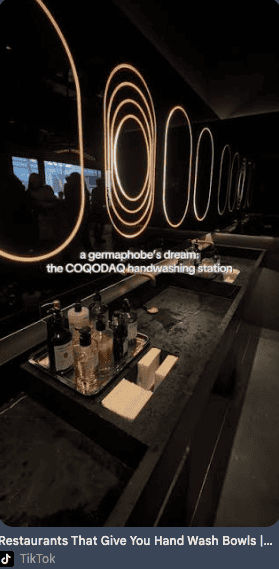
Carofano’s argument is that the brands people remember aren’t the loudest ones — they’re the ones that turn a small, repeatable behavior into a habit. Corona built one around dropping in a lime wedge and is now the world’s most valuable beer brand at $9.7 billion. Spotify’s Wrapped hit 200 million engaged users within 24 hours of its most recent release and generated roughly 500 million shares. The New York restaurant Coqodaq has guests wash their hands at an elaborate sink before eating fried chicken — a filmable moment that helped land it on the city’s toughest-reservation lists. Aperol didn’t invent a new drinking occasion; it attached itself to aperitivo hour, the early-evening moment people already enjoyed, and posted 23.1% organic sales growth in 2023. Carofano’s formula for getting this right: find a ritual that’s already yours rather than bolting one on, attach it to a moment customers already look forward to, and invest in the emotional payoff rather than just the transaction. The hard part, he notes, isn’t the idea — it’s doing it the same way, reliably, for years.
Claude was used to generate a first draft of this blog post.
Relevant Chapters in Essentials of Marketing
This article is close to a built-in case study for Chapter 16 (pass-along, viral promotion, earned media, and Jonah Berger’s STEPPS framework). Splitting the G maps cleanly onto several of Berger’s six factors: it’s Public (the foam line is visible to anyone at the table), it carries Social Currency (nailing it makes the drinker look skilled), and every single pint poured is a built-in Trigger for the behavior. Chapter 8 (branding, achieving brand familiarity) is the second connection, and it’s really the deeper point of the piece: a ritual is a low-cost, high-frequency way to build brand familiarity (insistence, or evangelism) without buying media. Guinness didn’t advertise its way to 3.8 million new drinkers — it built a habit that customers perform and broadcast on its behalf. An instructor may also wish to use as an example in Chapter 5 (Consumer Behavior) as the goal here is to make the purchase “routinized response behavior.”
Class Discussion Ideas
The STEPPS framework (see Chapter 16, What’s next? boxed element or this article) gives students a ready-made diagnostic tool for this article—nearly every ritual maps onto at least two or three of Berger’s six factors. The activities and questions below ask students to do that mapping themselves, then push further into whether a ritual can be engineered or only discovered.
In-Class Activities
- STEPPS Audit. In small groups, have students map each ritual in the article — Splitting the G, the Corona lime, Spotify Wrapped, Coqodaq’s hand-washing station, the Aperol Spritz, the Waldorf Astoria turndown — against Berger’s six STEPPS factors. Which rituals hit the most factors? Present findings to the class. (Chapter 16)
- Design Your Own Ritual. In teams, students invent a shareable ritual for a brand of their choosing — their university, a local coffee shop, a product they use daily — and must justify it using at least three STEPPS factors. Good for short team pitches. (Chapter 16)
- Brand Familiarity Ladder. Have students place Guinness, Corona, and a brand of their choosing along the brand familiarity continuum from Chapter 8, then argue whether a ritual moved — or could move — the brand up that ladder for some market segments. (Chapter 8)
- Ritual or Gimmick? Debate. Split the class and debate the article’s claim that a ritual “has to emerge naturally” from a brand versus being deliberately built — using Spotify Wrapped (designed by a product team) against Splitting the G (arguably discovered by customers) as opposing examples. (Chapter 16)
Discussion Questions
- Identify at least three of Jonah Berger’s STEPPS factors present in “Splitting the G.” Explain how each one operates. (Chapter 16)
- Answer: Splitting the G is Public — the foam line is visible to anyone at the table, which invites imitation. It carries Social Currency, since landing it perfectly makes the drinker look skilled or in-the-know. And it runs on a built-in Trigger — every pint poured is a new opportunity to attempt it. Some students may also argue for Story, given the competing accounts of whether the original target was the G or the gap between the harp and the logo.
- Carofano writes that “the pint didn’t change, but the behavior around it did.” What does this suggest about the relationship between product and ritual? (Chapter 16)
- Answer: The ritual added no new features or cost to the product — Guinness didn’t reformulate the beer. What changed was what customers do with an unchanged product, which is a promotion and behavior-design problem, not a product-development one. That distinction matters: for some brands, designing a ritual may be a cheaper way to build attachment than investing in product innovation.
- Compare Corona’s lime wedge to Guinness’s Splitting the G. Both are simple, low-cost rituals. What evidence would tell you whether one is doing more to build brand familiarity than the other? (Chapter 8)
- Answer: Chapter 8’s logic is that repetition builds recognition and eventually preference. The clearest evidence would be unaided recall — do people picture a lime when they picture Corona? — plus repeat trial tied specifically to the ritual. Students might note that Corona’s ritual has had decades longer to build familiarity than Guinness’s, which is newer and largely platform-driven.
- The article argues rituals should “emerge naturally” from a brand rather than being invented from scratch. Is this always true? Can you think of a successful ritual that was clearly built by a marketing team rather than discovered by customers? (Chapter 16)
- Answer: Spotify Wrapped is a strong counterexample: it was designed and launched by Spotify’s own product team, not discovered organically by users, and it still generated roughly 500 million shares. Strong answers should wrestle with whether “authenticity” matters less than execution, timing, and giving people something worth sharing.
- Aperol built its ritual around aperitivo hour instead of inventing a new occasion. What existing daily or weekly moment could a brand you use regularly attach a ritual to? (Chapter 16)
- Answer: Open-ended by design. Students should name a moment that already exists for their target customer — a commute, a post-workout stretch, a Sunday meal prep — and propose a specific, repeatable behavior a brand could attach to it, tying the answer back to “owning a moment” rather than manufacturing a new one.
- Why does the article argue that consistency is harder to sustain than a one-off campaign? What does that suggest about the kind of investment a ritual requires compared to a traditional promotion? (Chapter 16)
- Answer: A one-off campaign has a fixed production and media budget with a defined end date. A ritual requires delivering the same experience reliably and indefinitely, which is closer to an operations commitment than a marketing line item. This lines up with Chapter 16’s point that earned media is difficult to create and hard to control — a ritual is a long-term bet that customers will keep doing that work on the brand’s behalf.
- Evaluate this claim from the article: “Branding isn’t what you say; it’s what you do.” How does it connect to Chapter 8’s concept of brand familiarity? (Chapter 8)
- Answer: Chapter 8 ties brand familiarity to repeated, positive exposure, not necessarily to what a brand claims about itself in advertising. A ritual is a behavior, not a message, so it builds familiarity through direct experience rather than persuasion. Push students to note the limit of this claim, too: a ritual with no distribution behind it still needs some initial spark to reach critical mass — Guinness’s didn’t spread on pure organic discovery alone.
- If you were advising a brand with no existing ritual, which STEPPS factor would you start designing around first, and why? (Chapter 16)
- Answer: Open-ended and evaluative by design. Strong answers pick one factor and justify it against the brand’s specific customers and category — Public tends to work well for visually distinctive products, Practical Value for problem-solving services — rather than defaulting to “make it emotional” without specifics.