
Is Pool the Next Topgolf? Inside Poolhouse’s $55 Million Bet
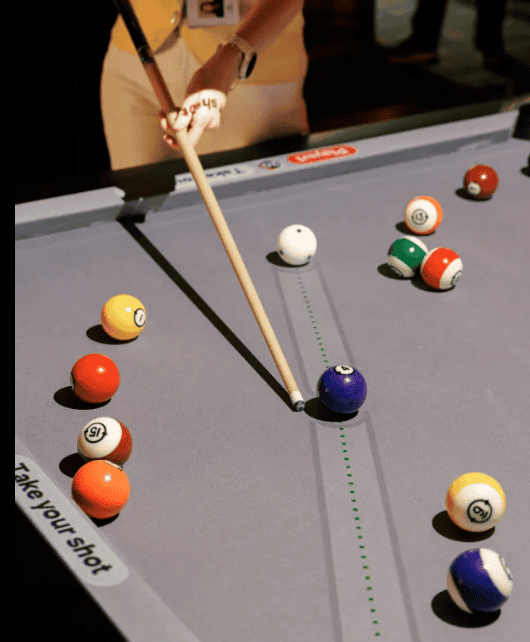
Topgolf turned driving-range golf into a group night out and sold for roughly $2 billion at its peak. The twins who built it, Steve and Dave Jolliffe, are now applying the same playbook to pool. See “A Tech-Infused Pool Hall Start-Up Raises $55 Million,” The New York Times, July 17, 2026). Their new venture, Poolhouse, runs upscale pool halls built around a technology platform called BillyQ — artificial intelligence, tracking cameras, and projectors that turn a traditional pool table into something closer to an arcade game, complete with shootout-style competitions and a “Q rating” handicap system that levels the playing field between a pro and a first-timer. Two months ago the company opened a 21,000-square-foot bar in London, and it’s now announcing a $55 million funding round led by Bluestone Equity Partners, valuing the two-year-old startup at more than $100 million.
The idea traces back to the pandemic, when the Jolliffe brothers’ local pool hall went insolvent. Their insight — the same one behind Topgolf and their mini-golf concept PuttShack — was that a traditional, skill-gated game becomes far more inviting when technology adjusts for ability and adds a layer of spectacle. BillyQ’s tracking system was built with the team behind Hawk-Eye, the computer-vision technology used in Major League Baseball, ATP tennis, and the Premier League. CEO Andrew O’Brien, a former Credit Suisse banker, has brought in a statistics professor to refine the Q rating system further, and cofounder Steve Jolliffe frames the goal explicitly as building “a competitive moat.”
But according to the company’s executives and investors, the bars themselves aren’t really the business. The bigger opportunity is selling BillyQ hardware and a subscription to other operators — cruise ships, movie theaters with empty floor space, even competing pool hall chains — and eventually shrinking the technology down to a price point “about that of a Peloton bike” for home use. Poolhouse is reportedly close to a U.S. distribution deal. Looming over all of it is Topgolf’s own trajectory: Callaway bought Topgolf for close to $2 billion in 2021, then sold a majority stake this year at roughly half that valuation amid slowing growth and high venue costs — venues that ran as much as $40 million to build. Steve Jolliffe notes that Poolhouse’s bars cost far less to open.
Claude was used to write a first draft of this blog post.
Relevant Chapters in Essentials of Marketing
Poolhouse is a clean case for Chapter 9 (the product life cycle, new-product development, competitive advantage). BillyQ is a new product built by layering technology onto a centuries-old game, and the article’s central risk question — can Poolhouse reach Topgolf’s highs without repeating its stumble — maps directly onto the market growth stage: Chapter 9 explains that industry profits typically rise and then start falling near the end of growth, as competition increases and customers grow more price-sensitive, which is exactly the pattern behind Topgolf’s slowing growth and high venue costs. Poolhouse’s partnership with Hawk-Eye’s creators and its work refining the Q rating system read as an attempt to build the competitive advantage the chapter says every firm needs once a category moves toward maturity. Chapter 6 (business and organizational customers) is the second anchor, since the article is explicit that selling BillyQ to other operators — cruise lines, movie theaters, competing pool halls — is the real business. Chapter 6 makes the point directly: organizations don’t buy for personal use, they buy to help them meet demand for their own goods and services, which is exactly the pitch to a cruise line or theater chain. The pool hall executives who flew to London to test BillyQ also fit a specific point in the chapter — some buyers want to be seen as forward-thinking and are eager to be first to try new products, and the chapter singles out these “innovators” as deserving special sales attention. Chapter 2 (types of opportunities to pursue) is the third connection: Poolhouse is pursuing more than one of the four opportunity types in Exhibit 2–11 at once — opening venues in new markets is market development, selling BillyQ to other operators pushes the company into a different level of the production-marketing system that looks like diversification, and a scaled-down home version is product development aimed at a customer Poolhouse already understands.
Class Discussion Ideas
This article gives students a strategy pivot to analyze in real time: Poolhouse is still opening bars, but its own executives are already describing a different business. The activities and questions below ask students to evaluate that pivot and apply the Topgolf cautionary tale directly to Poolhouse’s plan.
In-Class Activities
- Topgolf Postmortem. In small groups, have students list three specific lessons Poolhouse appears to be applying, based on the article’s description of Topgolf’s slowing growth and high venue costs — the kind of late-growth-stage profit squeeze Chapter 9 describes. Present findings to the class. (Chapter 9)
- B2B Pitch Deck. Teams role-play as Poolhouse’s sales team pitching BillyQ to one of three prospects named in the article — a cruise line, a movie theater chain, or a competing pool hall operator — and must address both the buyer’s economic needs (total cost, reliability, ROI) and behavioral needs (status, being seen as an innovator) from Chapter 6. (Chapter 6)
- Opportunity Matrix. Using Exhibit 2–11’s four types of opportunity (market penetration, market development, product development, diversification), have students classify Poolhouse’s three moves — new venues, selling BillyQ to other operators, and a home version — and defend their classifications, especially the B2B licensing move, which could reasonably be argued as either product development or diversification. (Chapter 2)
- Design the Home Version. In teams, students sketch what a consumer version of BillyQ, priced near a Peloton bike, would need to include or cut compared to the commercial version — treating this as the development and commercialization stages of Chapter 9’s new-product development process — then present the trade-offs. (Chapter 9)
Discussion Questions
- Poolhouse’s founders say they’re applying “the same playbook” that built Topgolf. What is that playbook, based on the article, and how does it apply to pool as a category? (Chapter 9)
- Answer: The playbook is adding technology — tracking, scoring, projected graphics, and skill-leveling handicaps — to a traditional, low-tech analog game to make it more exciting, social, and accessible to non-experts. Pool has the same raw ingredients Topgolf and PuttShack started with: a widely known but skill-gated activity that can intimidate casual or first-time players. BillyQ’s Q rating system addresses that gate directly by adjusting for ability, which is what turns a pool hall into a group activity anyone can join.
- Topgolf’s owner sold a majority stake this year at roughly half its 2021 valuation, citing slowing growth and high costs. Using the concept of the product life cycle, where would you place Topgolf today, and what does that suggest for Poolhouse? (Chapter 9)
- Answer: Chapter 9 explains that in the market growth stage, industry profits rise and then start falling near the end of the stage, as competition increases and customers become more price-sensitive — a pattern that matches Topgolf’s slowing growth paired with the cost of its roughly $40 million venues. That places Topgolf at the tail end of growth, heading into maturity, a stage where the chapter says a firm needs a real competitive advantage to keep winning. For Poolhouse, the lesson is to build a leaner cost structure before it reaches that same point, which is exactly what Steve Jolliffe points to when he notes Poolhouse’s venues cost far less than Topgolf’s.
- Poolhouse’s executives say running pool halls “understates the opportunity” and that selling BillyQ technology to other operators is the real business. Who is the customer in this new model, and how does their buying motivation differ from a bar customer’s? (Chapter 6)
- Answer: The customer shifts from an individual consumer buying a night out to an organizational customer — a cruise line, movie theater chain, or pool hall operator. Chapter 6 makes this distinction directly: organizations don’t buy for personal use, they buy to help them meet the demand for their own goods and services, so a cruise line isn’t buying a pool table for its own sake, it’s buying something it expects will help sell cabins and keep passengers entertained. That means the sales pitch has to address the buyer’s economic needs — total cost, reliability, return on investment — not just the fun factor that sells a night out.
- The article notes that executives from a pool hall company flew to London specifically to try BillyQ before considering an upgrade. What does this reveal about the business buying process, and about the kind of buyer Poolhouse may be attracting first? (Chapter 6)
- Answer: This looks like Step 2 of Chapter 6’s model of organizational buying — gathering information — playing out as an in-person product trial rather than a phone call or a written proposal, which fits a purchase this unfamiliar and this important to a competitor’s own venues. It also matches the chapter’s description of buyers who want to be seen as forward-thinking and are eager to be first to try new products; the chapter specifically calls these buyers “innovators” who deserve special sales attention, and this pool hall’s leadership fits that profile.
- Poolhouse plans to eventually sell a home version of BillyQ priced “about that of a Peloton bike.” What does this pricing target signal about the intended market and positioning for a home product? (Chapter 9)
- Answer: A Peloton-level price point signals premium consumer positioning — not a toy, but a serious purchase aimed at affluent home entertainment buyers already comfortable paying for connected fitness or gaming hardware. It also suggests Poolhouse expects to carry its subscription revenue model from commercial venues into the home, following the same connected-hardware-plus-subscription logic Peloton itself uses.
- Compare Poolhouse’s three growth moves — expanding venues, selling BillyQ to business operators, and eventually a home consumer product. Using Chapter 2’s four types of opportunity, classify each move, and argue which carries the most risk. (Chapter 2)
- Answer: Expanding venues into new cities is market development — the same bar experience sold in a new market. The home device is product development, since it’s a new product aimed at people who already understand and want the Poolhouse experience. Selling BillyQ to other operators is the hardest to classify: it keeps Poolhouse’s core technology but moves the company into a different level of the production-marketing system, from operator to supplier, which pushes it toward diversification. Chapter 2 is explicit that diversification usually carries the most risk, which would point to the B2B licensing push as Poolhouse’s riskiest bet — though a case can be made it’s actually the safer move here, since it doesn’t require Poolhouse to keep funding expensive venues of its own.
- Steve Jolliffe says the company is “always trying to build a competitive moat.” Using Chapter 9’s language, identify at least two specific moves described in the article that function as a competitive advantage, and explain why a competitor couldn’t copy them quickly. (Chapter 9)
- Answer: The partnership with Hawk-Eye’s creators gives Poolhouse access to computer-vision expertise proven across major sports leagues, which a new entrant would need years to replicate or license on its own. Hiring a statistics professor to refine the Q rating handicap system is a second advantage — Chapter 9 notes that even a slight edge can matter a great deal once a category moves toward maturity, and accurate skill-leveling is core to what makes the BillyQ experience work, so the data and expertise behind it aren’t trivial to copy quickly.
- If you were advising Poolhouse’s board, what single metric would you want tracked most closely to avoid repeating Topgolf’s trajectory? (Chapter 9)
- Answer: Open-ended and evaluative by design. Strong answers propose something more specific than revenue — venue-level operating cost relative to Topgolf’s benchmark, subscription attach and retention rates among B2B operators since that’s the stated real business, or same-venue growth as an early signal that the market growth stage is ending — and should explain why that particular metric would surface a slowdown earlier than the metrics Topgolf’s owners likely watched.