
Whoop Seeks More Women Customers
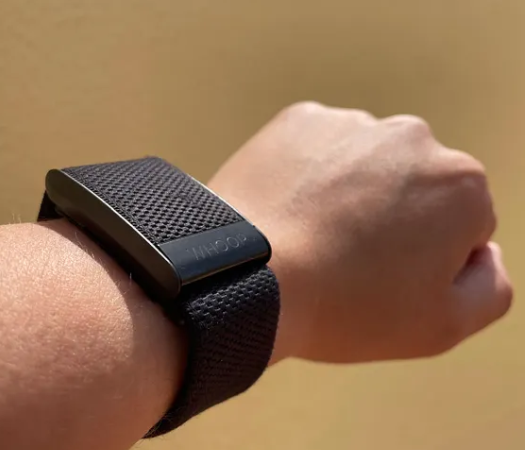
Whoop has spent most of its 14 years selling to what The Wall Street Journal described as an “athletic male American base.” Through August of this year, the biggest single slice of its national TV money went to the PGA Tour. Its new chief marketing officer says the growth ahead is with women. That gap will carry a full class period. See “Inside the marketing powering Whoop’s ‘pivotal’ next act” (Marketing Brew, August 28, 2026).
Whoop hired DJ van Hameren as chief marketing officer in July, after more than three decades at Nike. He was the first of a run of hires — a chief commercial officer, the company’s first chief communications officer, a chief medical officer, and a chief accounting officer — following a $575 million Series G round that valued Whoop at $10.1 billion. The company passed 3 million members worldwide in July.
The move toward a more female target market is already working. Whoop reported a 111% year-over-year increase in women members as of August, partnered with a menstrual-cycle-tracking app, and signed reigning US Open women’s singles champion Aryna Sabalenka. The weekly Whoop Podcast, running since 2018, has given recent episodes to fertility and reproductive health. “Owned media is powerful when it does not feel like a brand talking at people,” van Hameren told Marketing Brew. “It has to earn attention through substance.”
The paid media tells a different story. Whoop has run about $2 million in national linear TV ads so far in 2026, up from $488,000 for all of 2025. But 20.9% of that went to the PGA Tour and 18.2% to the X Games, and by network the Golf Channel took the largest share at 15.2%. All of this while Oura chases an IPO that could value it as high as $16 billion and Apple holds roughly 18% of the wearables market.
Claude was used to write a first draft of this blog post.
Relevant Chapters in Essentials of Marketing
Chapter 4 (segmentation and positioning) is the obvious fit. The chapter’s segmenter-versus-combiner discussion contrasts a single target market approach with a multiple target market approach, and it says the right choice depends on resources, competition, and customer similarity. All three just moved for Whoop: $575 million in fresh capital, Oura and Apple pressing from opposite directions, and a women’s segment the company now believes it can serve differently. This article might also work with Chapter 16 (publicity — earned, owned, and social media), which defines owned media as messages a brand sends through a channel it directly controls, and then says of branded podcasts that a company “should not look at them as an extended advertisement” but should start from what customers want. That is van Hameren’s quote about earning attention through substance, almost word for word. Chapter 15 (advertising and sales promotion) is third. The chapter says the best medium depends on promotion objectives, the target markets you want to reach, the funds available, and the nature of the media — four tests that Whoop’s golf-heavy buy passes unevenly.
Class Discussion Ideas
One angle worth class time might be the distance between a stated target market and the media dollars behind it. Whoop’s executives have said plainly where they expect growth to come from. The spending data says where the company actually bought attention this year. Students can hold both facts at once and argue about which one should give.
In-Class Activities
- Reallocate the Buy. In small groups, give students Whoop’s actual 2026 TV breakdown — 20.9% to the PGA Tour, 18.2% to the X Games, 15.2% by network to the Golf Channel — and ask them to redistribute the same $2 million against a target market of women who exercise regularly. Each group names three media and defends each one against the chapter’s four criteria for choosing the best medium. (Chapter 15)
- Segmenter or Combiner? Students decide individually whether Whoop should run on marketing mix across athletes and everyday health trackers or build separate mixes, and write the position in three sentences. Then pair each student with someone who chose the opposite and give them five minutes to change each other’s minds. Ask how many moved. (Chapter 4)
- Pitch the Episode. Teams pitch one episode of the Whoop Podcast aimed at a woman who does not think of herself as an athlete: guest, topic, what the listener walks away with, and how it stays clear of being an extended ad. Classmates vote on which episode they would actually finish. (Chapter 16)
- CMO Versus CFO. Half the class plays Whoop’s marketing side arguing for a new women’s sports property; half plays finance defending the renewal of the PGA Tour deal. Each side gets three minutes and has to cite a number from the article. Vote before and after. (Chapters 4 and 15)
Discussion Questions (and Answer Ideas)
- Is Whoop using a single target market approach, a multiple target market approach, or a combined target market approach? (Chapter 4)
- Answer. Whoop is moving from something close to a single target market approach toward a multiple target market approach, with distinct efforts aimed at women and at everyday health consumers. Students can reasonably argue it is still a combiner, since the article describes changes to promotion but not to the product — the same device and subscription go to everyone. That reading is defensible and arguably the more careful one, because broadened messaging is not the same thing as separate marketing mixes.
- What does the 111% year-over-year increase in women members tell us, and what does it leave out? (Chapter 4)
- Answer. It gives a growth rate with no base and no current share. A 111% increase off a small starting number is a small absolute gain. Chapter 4 asks whether a segment is substantial — big enough to be profitable — and that question cannot be answered from a percentage alone. Students should ask for the denominator before treating this as proof the strategy is working.
- Apply the chapter’s four tests for the best medium to Whoop’s TV buy. Does it fit the stated strategy? (Chapter 15)
- Answer. Objectives and target markets are where it strains. If the objective is reaching women and everyday consumers, golf programming fits the members Whoop already has better than the ones it says it wants. Students may defend the buy on the other two tests: the budget is small next to Apple’s, and golf audiences skew toward the income levels a premium subscription needs. Spending where returns are proven while new segments develop is a fair argument, not a lazy one.
- How does Chapter 16 define owned media, and does the Whoop Podcast meet the standard the chapter sets? (Chapter 16)
- Answer. Owned media are promotional messages a brand sends through a channel it directly controls, with the brand as the source. The chapter’s guidance on branded podcasts is that they should begin from what customers want rather than function as a long advertisement. Episodes on fertility and reproductive health pass that test more convincingly than a product-feature episode would. Students should also name the built-in limit: a podcast reaches people who already follow the brand, so it is better at deepening current members than recruiting new ones.
- Which competitor is the bigger problem for Whoop — Oura or Apple? (Chapter 4)
- Answer. Chapter 4 says competition is one of the factors that decides whether to segment or combine. Apple is the combiner: one broad mix, roughly 18% share, and resources Whoop cannot match. Oura is closer to Whoop’s own position, a focused device fighting for the same health-tracking customers, with an IPO that could value it above Whoop. Students who pick Oura are arguing the direct fight matters more; students who pick Apple are arguing scale eventually wins. Both hold up, and the answer depends on which segment Whoop chooses to defend.
- Whoop plans to market heavily around Black Friday, Cyber Monday, and New Year’s resolutions. Is that consistent with van Hameren’s line that “people’s health is every day”? (Chapters 15 and 16)
- Answer. There is real tension here. Resolution-season advertising buys attention at a moment of high intent, which is sound media planning, but it reaches people who think about health seasonally — the opposite of the daily relationship the owned media is built to create. Strong answers will separate the jobs: paid media recruits at the moment of intent, owned media has to keep those members past February. Students who see no conflict at all can defend that, since the promotion blend is supposed to use different tools for different stages.
- If you were van Hameren, what one change would you make first, and what would you give up to fund it? (Chapter 4)
- Answer. Open-ended by design. The best answers commit to a single move and defend it against a specific fact in the article — shifting money out of golf, signing a women’s sports property, or building a genuinely separate marketing mix instead of a broadened message. Weak answers list everything. The second half of the question is the important half: Chapter 4 is direct that segmenting costs more than combining, so students have to name the tradeoff.