
DogSauce Landed 3,750 Walmarts. Paying for the Order Was the Hard Part.
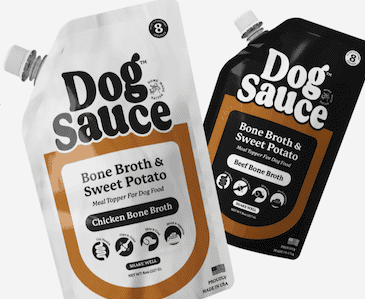
Getting the order is supposed to be the win. For Dakota Sheets, founder of DogSauce, a pourable food topper for dogs made with sweet potato and bone broth, the order was where the trouble started. You and your students can read about it in “This startup got a dream order from Walmart. Fulfilling it almost turned into a nightmare” (Retail Brew, August 27, 2026).
Sheets built DogSauce direct-to-consumer, then landed Walmart distribution in about 1,400 stores in 2024. “It’s the first time I’m looking at significant cash flow and not just focused on cost per acquisition online,” he told Retail Brew. But a bootstrapped DTC brand does not have 1,400 stores’ worth of inventory sitting around, and Sheets didn’t have the cash to produce it. “I needed money, and I used my house,” he said — a home equity line of credit.
Early this year, Walmart told him it wanted DogSauce in 3,750 stores. He needed money to fill this once-in-a-lifetime purchase order. His bank said no; startups don’t have “the historicals,” as Sheets put it. He took an online small-business loan instead and watched the rate climb to 36% while he was still waiting on packaging to arrive — paying interest every week on an order Walmart wouldn’t pay him for until long after it shipped.
Walmart pointed him to Bridge, a three-year-old lender that does what the industry calls purchase order financing and Bridge calls “production financing.” Banks lend on last year’s numbers. Bridge lends against the purchase order itself, and doesn’t ask for repayment until the brand gets paid. “Fundamentally, the biggest issue is what we’re doing is forward-looking,” said co-founder Harte Thompson. Walmart has a partnership with Bridge and takes no fee; Thompson says the retailer wants up-and-coming brands on its shelves and wants them able to scale.
The money isn’t cheap. Thompson says he tells owners in thin-margin categories not to take it. Sheets took it in mid-May, paid off the online loan, and expects to borrow again in August — “maybe twice the size.”
Claude was used to write a first draft of this blog post.
Relevant Chapters in Essentials of Marketing
Selling B2B can have big challenges. This article ties to Chapter 6 (business and organizational customers) where there is a section on selling to retailers and wholesalers. The chapter’s core point is that organizations buy to help them meet demand from their own customers rather than for personal use, and Walmart’s behavior here shows it plainly: the retailer steered a supplier toward a lender because it needs DogSauce on the shelf. The story is also a useful correction to how students picture the balance of power with a giant retail buyer. Thompson notes that Walmart is competing with Target and Costco for this brand’s attention, which is the kind of buyer-seller relationship Chapter 6 describes — mutual dependence, not one side dictating terms.
Chapter 11 (distribution customer service and logistics) is also a fit. This Chapter teaches that the customer service level a firm offers is a strategy decision with a real cost attached, and that the cost shows up in places students don’t expect. Here it showed up as a home equity line and 36% interest, with Sheets waiting on packaging while the meter ran. If the shipment slips, Walmart has empty shelf space — the stockout the chapter warns about, viewed from the supplier’s side of the channel.
Chapter 10 (place and development of channel systems) is worth a mention too. The whole episode is a DTC brand adding an indirect channel and finding out the economics are different. Online, Sheets managed cost per acquisition. In retail, he has to finance production months before the retailer pays him.
Bonus Chapter 2 (managing marketing’s link with other functional areas) is also a good fit as it deals with how to finance marketing strategies.
Discussion Questions (and Answer Ideas)
- Walmart lends DogSauce nothing and says it takes no fee from Bridge. So why bother connecting a small supplier to a lender? (Chapter 6)
- Answer. Chapter 6’s central idea answers this: organizations buy to help them meet demand from their own customers. Walmart’s interest in DogSauce is shelf productivity, and an empty facing generates no sales. Thompson adds the competitive motive — Walmart is competing with Target and Costco for growing brands, so making itself the easiest big retailer to sell into is a way to win that competition. Students should notice this is self-interest, not generosity, and that the two are compatible.
- The bank said no because DogSauce lacked “the historicals.” Bridge said yes because of the purchase order. What does that difference say about what a Walmart order is worth? (Chapter 6)
- Answer. The purchase order is valuable because of who signed it — Bridge is effectively underwriting Walmart’s creditworthiness rather than DogSauce’s. That is a direct consequence of the concentration Chapter 6 describes in organizational markets: a small number of large customers account for a large share of purchases, and an order from one of them carries weight a startup’s balance sheet never could. Students should also see the limit: Bridge still bears the risk that DogSauce fails to produce, which is part of why its rate is higher than a bank’s.
- Chapter 11 frames customer service level as a decision with a cost attached. What level did DogSauce commit to, and what did it cost? (Chapter 11)
- Answer. By accepting the order, Sheets committed to having product in 3,750 stores on Walmart’s schedule — a very high service level for a company his size. The cost shows up not in warehouses or trucks but in financing: a home equity line for the first rollout, then interest at 36%, then a Bridge loan. This is a good place to make the point that Chapter 11’s total-cost thinking includes the money tied up in inventory and production, which students routinely leave out.
- If the shipment slips, who is hurt more — Walmart or DogSauce? (Chapter 11)
- Answer. Chapter 11’s stockout logic applies to both, but unevenly. Walmart loses sales on one item and disappoints shoppers who came for it; DogSauce risks the relationship and the business. Students should weigh both sides. Some will argue Walmart bears the larger cost because shopper trust is built across thousands of small disappointments, and that argument is worth taking seriously rather than waving off.
- Sheets said he didn’t want to give up equity: “You have to push all your chips in.” Was that the right call? (Chapter 2)
- Answer. Open-ended by design. Chapter 2’s point about matching strategy to the firm’s objectives and resources is the frame — an owner who wants control will weigh a 36% loan differently than one optimizing for expected value. Strong answers will name what equity would have bought besides money, such as a partner with retail experience, and then argue why that was or wasn’t worth the dilution. Weak answers just repeat that debt is cheaper than equity.
- DogSauce grew online worrying about cost per acquisition. What changes about the marketing mix once the same product is in 3,750 stores? (Chapter 10)
- Answer. Nearly everything downstream of the product. Price has to leave room for the retailer’s margin instead of going straight to the customer; promotion shifts from performance advertising toward building enough demand that the item sells off a shelf without a salesperson; place becomes a forecasting and production problem rather than a fulfillment one. Chapter 10’s framing of indirect channels covers this — the producer gains reach and gives up control.
- Think of a small brand you buy from that isn’t in mass retail yet. What would it need in place before it could safely say yes to an order like this? (Chapters 6 and 11)
- Answer. Ask for specifics, not a list of virtues. Good answers name production capacity or a co-packer, packaging that meets the retailer’s requirements, a way to finance the gap between production and payment, and someone who can actually service the account. The point students should reach is that saying yes to a large organizational customer is an operating commitment, not a sales win.