
For Every 100 Pitches, 3 to 6 Winners: Inside the Room Where Big-Box Buyers Decide
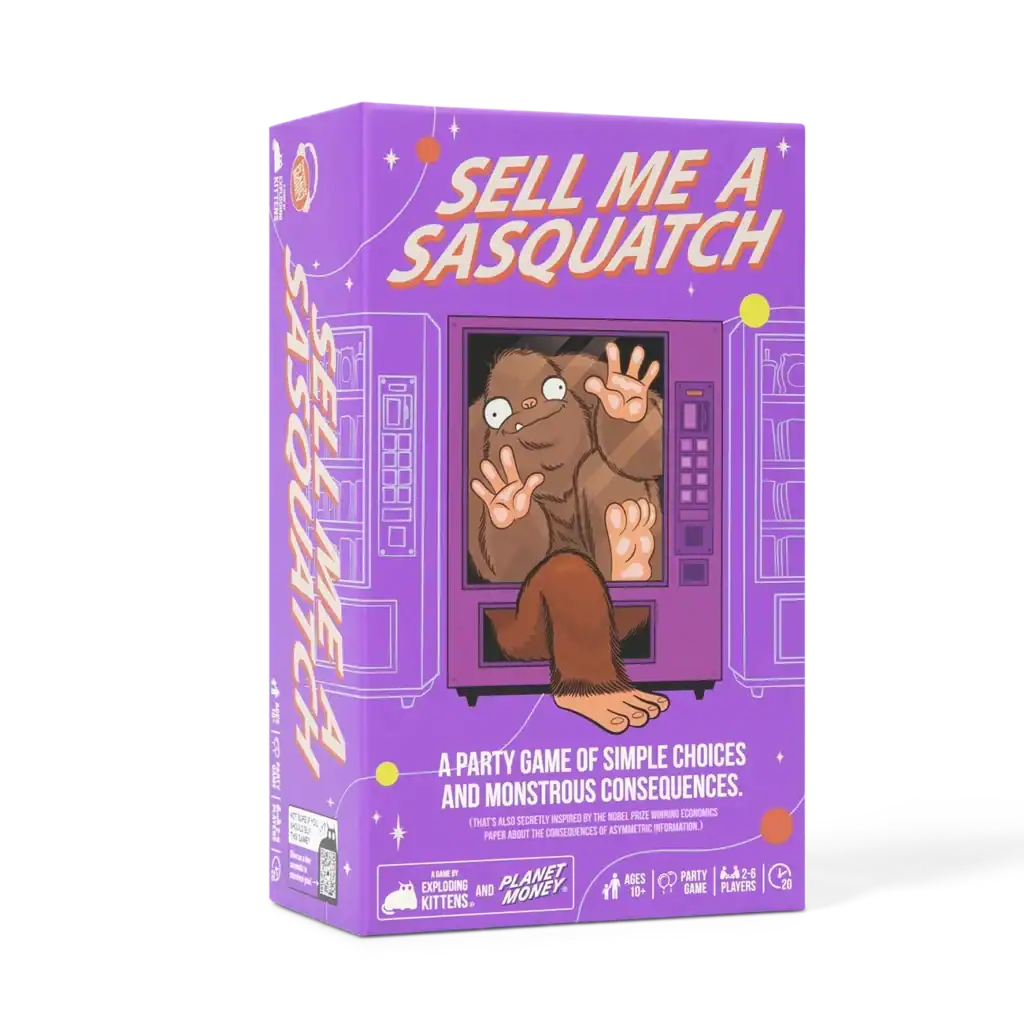
Getting a product onto a Walmart or Target shelf is the part of Place students almost never see. NPR’s Planet Money just recorded it.
For two years, the show has been building a board game with the company Exploding Kittens, partly as a way inside big-box retail. The most recent episode, “Who decides what big box sells? Our GAME got us answers” (Planet Money, NPR, August 21, 2026; full transcript on npr.org), follows that game into a line review — the twice-a-year meeting where a chain’s buyers decide what stays on the shelf, what gets dropped, and what gets added. Co-host Erika Beras got in the room and had three to five minutes to pitch. Her game was one of 13 prototypes Exploding Kittens brought that day.
The buyers barely reacted to the game itself, or to Planet Money’s audience. They asked about price. As Beras relayed it, the read in the room was that it wasn’t a $10 game but didn’t look like a $20 game either. She heard rejection. Exploding Kittens co-founder Elan Lee heard the opposite: “They’re not asking about whether or not they should sell this thing. They are now asking about the best way to sell it.” Five months later, two of the largest U.S. retailers accepted Sell Me a Sasquatch full chain across North America — a first order of roughly 100,000 units at a $19.99 suggested retail price.
The odds make the lesson. Matt Adelmann, a former Target buyer who handled deli and prepared foods, lays out the funnel: of 100 line review submissions, about 30 get a meeting, and 3 to 6 of those end up on a shelf. His reasoning is what students need to hear. “If I bring this in, I have to replace something. You’re going to take a spot on the shelf at the expense of somebody. Are you going to do better than that thing that I take out?” And the buyer’s yes isn’t the end of it. Buyers then defend their planograms to VPs and SVPs, who push back hard.
Earlier episodes in the series are collected at “Planet Money Makes a Boardgame” on npr.org.
Claude was used to write a first draft of this blog post.
Relevant Chapters in Essentials of Marketing
This story plays well with Chapter 6 (business and organizational customers) as it describes how Planet Money (and Exploding Kittens) sell their game to a big box retailer. The chapter tells students that organizations don’t buy for personal use — wholesalers and retailers buy to resell at a profit — which is exactly Adelmann’s “is this going to sell?” It also says retail buyers must be highly selective because shelf space is limited, that a large chain may see 150 to 250 new items in a week, and that most retailers want evidence of performance before granting widespread distribution. Then there is committee buying: the chapter notes that the buyer often does not have final responsibility and that the seller may never present to the committee in person. That is precisely what happens here. Beras pitches the buyers; the buyers go pitch their VPs and SVPs. Multiple buying influence, in the wild.
Chapter 12 (retailers, wholesalers, and their strategy planning) also fits. The chapter treats a retailer’s product selection — the width and depth of its assortment — as a marketing mix decision the retailer makes for its own target market, not a favor it does for suppliers. It also explains how scanner data lets stores allocate more shelf space to faster-moving, higher-profit items, and that mass-merchandisers like Walmart and Target run on fast turnover. The planogram Adelmann describes is that logic drawn to scale.
Chapter 10 (place and development of channel systems) is the third connection. The episode is a case study in a retailer-led channel system: the chapter points out that powerful chains like Walmart and Kroger dominate their channels and act as channel captains, and the whole episode is a producer bending its product, its price, and its package to what those captains will accept. It also sets up the ideal market exposure decision — intensive, selective, or exclusive — which is worth putting to students, since a $19.99 impulse-priced party game is being pushed toward intensive distribution.
Class Discussion Ideas
The useful angle here is scarcity. Shelf space is fixed, so every new product is an argument that something already there should go. That reframes a lot of what students assume about “getting distribution,” and it explains why the buyers cared about price rather than about how fun the game was. The activities below put students on both sides of the table.
In-Class Activities
Line Review Role-Play. Split the class into supplier teams and one buying committee. Give each supplier team three minutes to pitch a new product for a category the class knows — energy drinks, cereal, board games. Hand the buying committee a list of eight items currently on the shelf and tell them they may accept new products only by dropping existing ones. Have the committee announce its cuts and defend them. (Chapter 6)
Shelf Audit. Send students to a Walmart, Target, or supermarket to photograph one category and count facings. In class, have them map what they found, identify which item they would cut and which they would expand, and state the evidence a supplier would need to bring to change their mind. (Chapter 12)
The $9.99 Question. Give teams the Planet Money problem in reverse: the buyers signaled the game was priced between two shelf positions. Have each team build the $9.99 version and the $19.99 version — what is in the box, what the box is made of, who it is for — and present both. Exploding Kittens spent the difference on the product rather than taking the margin; ask teams whether they would do the same. (Chapters 8 and 17)
Package the Shelf Test. Before printing, Exploding Kittens sneaks a prototype onto a real store shelf to see whether it reads from a distance, in shadow, and knocked over. Have students design a package front for a product of their choice, print it at box scale, and pin the class’s designs together on one wall as a mock shelf. Vote on which three get seen first, then discuss why. (Chapter 8)
Discussion Questions (and Answer Ideas)
- Why did the buyers ask about price instead of about whether the game is fun? (Chapter 6)
- Answer. Because they aren’t buying for personal use. Chapter 6 makes the point that retailers buy to resell at a profit, so the buyer’s real question is whether the item will turn over and return margin in a fixed amount of space. Whether the game is fun matters only as evidence it will sell. Elan Lee read the price question as good news for the same reason — a buyer who is solving the placement problem has already decided the item belongs in the store.
- Adelmann says 100 submissions become about 30 meetings and 3 to 6 shelf placements. What does that funnel tell you about what a supplier’s pitch has to accomplish? (Chapter 6)
- Answer. It has to beat an incumbent, not just look good. Adelmann is explicit: a new item takes a spot at the expense of something already selling. The chapter says most retailers want evidence of performance in other stores or test markets before granting widespread distribution, which is why Beras’s argument leaned on Planet Money’s proven audience rather than on the game’s design. Students may reasonably disagree about how much the celebrity-in-the-room factor mattered; Adelmann himself says creators showing up with products has become common in food and cosmetics.
- Who was really being sold in this deal — and how many buying influences can you count? (Chapter 6)
- Answer. At least three layers: the two buyers in the room, the VPs and SVPs they had to defend a planogram to, and the end consumer the whole chain is betting on. Chapter 6 calls this multiple buying influence and notes that a buying committee’s more impersonal process reduces the impact of a persuasive salesperson. That cuts against Planet Money’s own telling of the story, which credits Beras’s performance. Both things can be true — a memorable pitch gets the buyer to champion the item upstairs, where the data has to carry it.
- Exploding Kittens took on development, prototyping, and manufacturing costs, and NPR takes a 3 to 7 percent royalty on net revenue. Who is bearing the risk, and does the split look fair? (Chapters 10 and 6)
- Answer. Exploding Kittens funds everything before a single unit sells, so it carries the inventory and failure risk; NPR contributes the brand and the audience and gets paid only out of revenue. Chapter 10’s channel discussion is useful here: functions have to be performed by somebody in the channel, and the party performing them expects to be paid for them. The royalty escalator at 200,000 units is a reasonable answer to the fairness question — it ties NPR’s share to the outcome it can actually influence.
- The episode mentions paying “rent” for an end-cap display. How does that fit what Chapter 12 says about a retailer’s marketing mix? (Chapter 12)
- Answer. Prime display space is a scarce resource the retailer controls, so it prices it. Chapter 12 frames product selection and store layout as decisions the retailer makes to serve its own target market and its own profitability, which means suppliers who want the best positions pay for them. Ask students who ultimately pays that cost — it lands in the supplier’s expenses, and eventually in the shelf price.
- Malone reports that 81 percent of U.S. retail buying still happens in physical stores. Should a new consumer product still treat big-box shelves as the goal? (Chapters 10 and 12)
- Answer. Open by design. The number argues yes for a $19.99 impulse-priced party game, where Chapter 10’s case for intensive distribution is strong: the buyer has to see it to buy it. Students should push back with Chapter 12’s material on online retailing, since a direct-to-consumer or Amazon path avoids the line review entirely, keeps more margin, and doesn’t require winning a shelf slot from an incumbent. Strong answers name the product characteristics — impulse purchase, low price, gift occasion — that decide it rather than picking a side in general.