
Beyond the Wrapper: Packaging as Protection, Promotion, and Product Enhancement
The last decade has seen companies placing much more attention on the marketing opportunities of packaging. Consequently, its prominence in Essentials of Marketing has grown. In our textbook, we point to three potential sources of value from packaging: 1) protecting, 2) promoting, and 3) enhancing the product. This past April features at least four Fast Company articles related to packaging. These might give you examples for class, assigned readings, and/or in-class activity ideas. Packaging changes tend to last, so you might be able to use them for several semesters. Consider these:
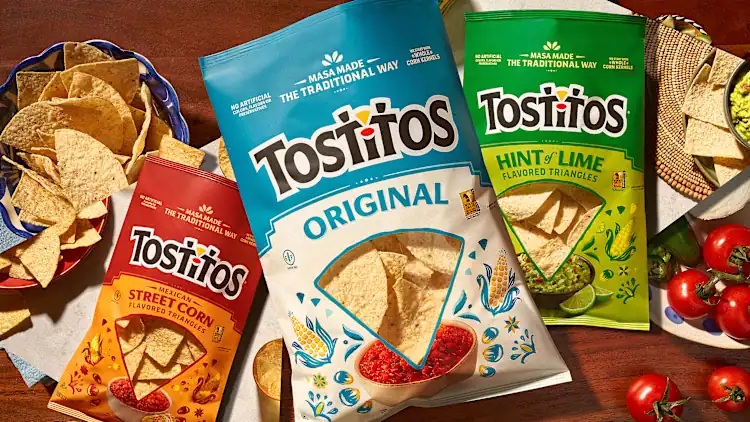
“Tostitos redesigned its bags to emphasize one obvious thing” (Fast Company, April 2, 2026). This article explains how PepsiCo redesigned Tostitos packaging to make the brand’s product origin—corn—more visually and strategically central. The new bags move away from simply positioning Tostitos as a “party brand” and instead emphasize craft, authenticity, and tradition through phrases like “Masa made in the traditional way,” warm earth tones, hand-drawn corn illustrations, and a front-window design that visually connects the chip to salsa or guacamole. In Chapter 8 terms, this is packaging as promotion and enhancement: the package reframes the product as culturally grounded and higher quality, while also helping Tostitos stand apart from potato chips and smaller “craft” competitors.
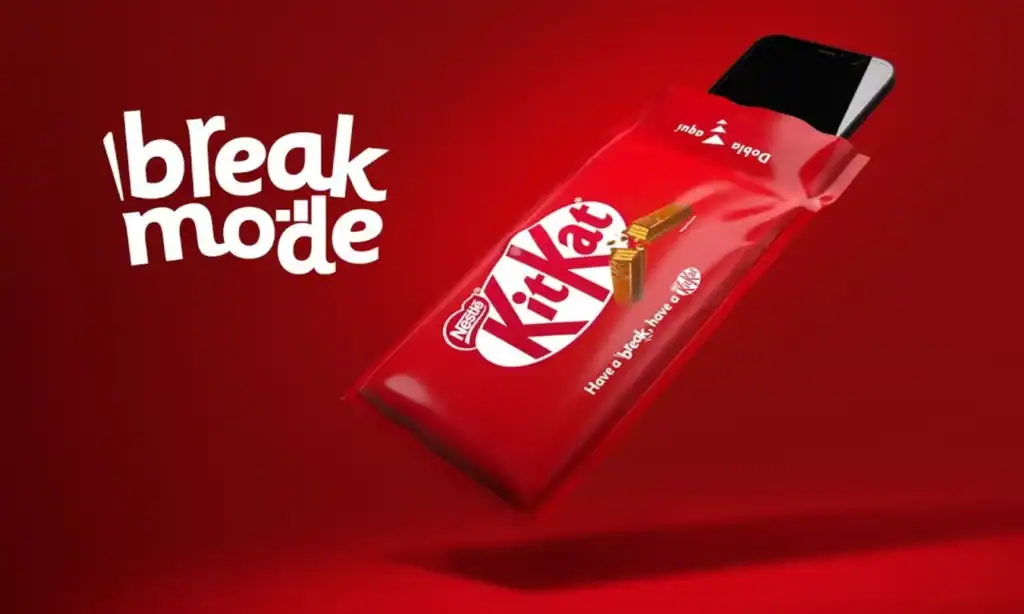
“KitKat’s newest product is . . . a Faraday cage?” (Fast Company, April 27, 2026) describes KitKat Panama’s “Break Mode” wrapper, a pouch designed like an oversized KitKat package that blocks phone signals using Faraday cage technology. The concept translates KitKat’s “Take a Break” positioning into a physical packaging stunt: put your phone in the wrapper and disconnect. While the article notes that commercial viability is still uncertain, the real value is publicity and social sharing rather than everyday utility. In Chapter 8 terms, this is packaging as promotion and, somewhat playfully, enhancement—the package adds a “digital detox” experience to the brand promise. It also connects strongly to Chapters 13 or 16 because the idea is built to generate earned media and online buzz.
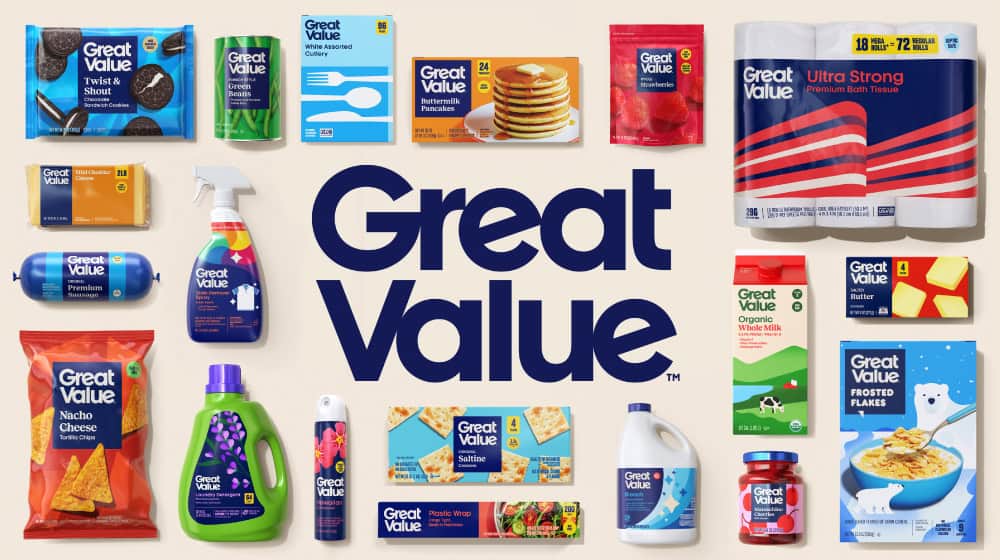
“Walmart’s largest private label rebrands—and goes full ‘shoppy shop’” (Fast Company, April 15, 2026) covers Walmart’s first comprehensive Great Value redesign in more than a decade, affecting nearly 10,000 food and consumable products across more than 100 categories. Great Value historically used plain, value-signaling packaging, but Walmart’s research found that customers appreciated the savings while not always feeling proud to display the products at home. The redesign uses cleaner typography, a richer blue logo, consistent nutrition-label placement, and more polished visuals to close the gap between perceived product quality and package appearance. This is a strong Chapter 8 example of dealer brands/private labels, packaging as promotion, and packaging as enhancement: Great Value no longer needs to “look cheap” to communicate value; instead, it can signal quality at the right price.
This article, “How Garage Beer designed its delightfully retro glass bottles” (Fast Company, April 27, 2026) discusses Garage Beer’s move into glass bottles with a custom retro “stubby” bottle meant to reinforce the brand’s old-school, uncomplicated identity. Rather than chase flavor extensions or flashy beer-category trends, Garage Beer uses packaging to strengthen its “beer-flavored beer” positioning and nostalgia-driven personality. The bottle’s dark-brown glass, short-neck form, twist-off cap, and vintage feel align with the brand’s promise of simple, affordable, garage-friendly beer. In Chapter 8 terms, this is packaging as promotion and enhancement: the bottle does not just contain the beer; it communicates the brand’s personality and creates a shelf presence that feels different from both mainstream light beer and modern craft beer.
Relevant Chapters in Essentials of Marketing
Chapter 4: Focusing Marketing Strategy with Segmentation and Positioning
All four examples are really positioning cases. Tostitos is repositioning around corn, masa, and authenticity; KitKat reinforces its “break” positioning; Great Value is repositioning private label from “cheap-looking” to “smart value”; and Garage Beer uses packaging to sharpen a nostalgic, no-frills identity. Chapter 4’s LEGO example also emphasizes how firms use customer insight to refine target markets and positioning.
Chapter 8: Elements of Product Planning for Goods and Services
Chapter 8 is the best fit because it explicitly frames packaging as a way to promote, protect, and enhance products. These articles show that packaging is not just a container; it can be a brand cue, a source of product information, a point-of-purchase ad, a signal of quality, and even a product experience. Chapter 8 also discusses dealer brands/private labels, making the Walmart Great Value example especially relevant.
Chapter 13: Promotion: Introduction to Integrated Marketing Communications
These packaging examples also show how packaging fits into a broader promotion blend. KitKat’s Faraday wrapper is essentially a publicity idea wrapped in packaging. Tostitos and Garage Beer use package design to communicate positioning at the point of purchase. Walmart’s Great Value redesign functions as a massive in-store communication campaign across thousands of SKUs. Chapter 13’s discussion of awareness, interest, and integrated promotion connects well to how packaging can carry a message without relying only on paid advertising.
Optional extension: Chapter 7: Improving Decisions with Marketing Information
Walmart and Garage Beer both show packaging decisions guided by research. Walmart used focus groups, mock-store testing, call-center feedback, ratings, and third-party testing; Garage Beer surveyed fans about bottle shapes. This makes Chapter 7 useful for discussing how marketing research can turn design preferences into strategy decisions. /h
Five In-Class Activities Related to Packaging
It is easy to copy a photo of the packaging into a slide, describe the article, and stimulate a discussion or activity.
- Packaging Function Sort: Protect, Promote, Enhance (Chapter 8)
- Bring in or show images of several packages, including the four article examples. Ask students to classify each package feature as protecting, promoting, enhancing, or some combination. For example, KitKat’s Faraday wrapper protects attention more than candy; Great Value’s redesign promotes quality and enhances pride of ownership; Garage Beer’s bottle enhances the consumption ritual.
- Repositioning Through Packaging Challenge (Chapter 4)
- Assign student teams a familiar product category, such as cereal, bottled water, frozen pizza, detergent, or snack chips. Each team must redesign the package to reposition the brand: premium, sustainable, nostalgic, healthier, fun, local, or budget-friendly. They should explain what visual cues—color, typography, claims, shape, materials, imagery—support the new position.
- Private Label Shelf Battle (Chapter 8)
- Show students a national brand and a private-label competitor. Ask them to evaluate which package better communicates quality, value, trust, and ease of choice. Then have them redesign the weaker package for a specific retailer. This works especially well with the Great Value article and Chapter 8’s discussion of dealer brands competing with manufacturer brands.
- “Publicity Packaging” Brainstorm (Chapter 13 or 16)
- Using KitKat’s Faraday wrapper as a model, ask teams to create a packaging idea designed primarily to earn media attention. The package must still connect to the brand promise. Examples: a coffee cup sleeve that blocks calendar notifications, a sleep-aid package that dims when exposed to light, or a snack package that turns into a party game. Students should then debate whether the idea is useful innovation or just a stunt.
- Packaging Field Audit (Chapter 8)
- Send students to a grocery, convenience store, or online retail site and have them photograph or screenshot three packages in one category. They should identify how each package signals price level, target market, quality, usage occasion, and brand personality. In class, students compare findings and discuss which package would win at the point of purchase and why.