
BYD’s Battery Breakthrough and the View from the Rearview Mirror
As an owner of a couple of EVs, and someone concerned about climate change, but also an American citizen concerned about the competitiveness of our auto industry, I have mixed feelings about this.
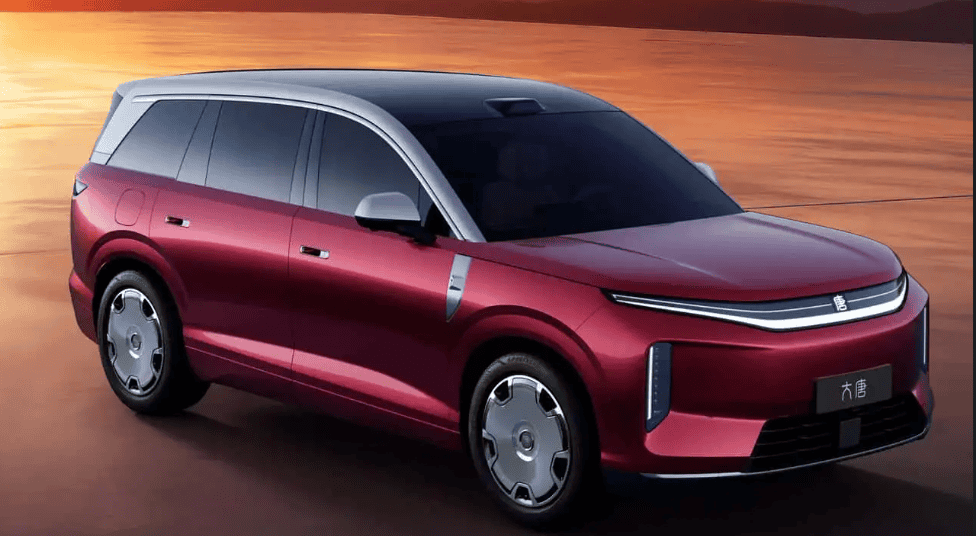
At a launch event in Shenzhen, China this past March, BYD announced a battery technology that quietly dismantled two of the internal combustion engine’s last remaining advantages. Its new Blade Battery 2.0, detailed in “BYD Just Killed Your EV Argument with a Battery That Competes with Gas Engines,” (Fast Company, March 2026), delivers over 621 miles of range on a single charge and a five-minute charge that adds roughly 250 miles of driving range—effectively matching the time and distance convenience of a gas station stop. These two features alone—long the emotional and practical anchors of consumer resistance to EVs—have long been the American auto industry’s comfort zone. That comfort zone may now be gone.
The technical achievement behind BYD’s announcement is not incremental. The company achieved a 36–40% increase in energy density over its previous generation battery, while simultaneously reducing production costs by 15–30%. To make fast charging practical at scale, BYD confirmed it is deploying 15,000 megawatt-charging stations across China by the end of 2026, and a 3,000-station European network on the same timeline. And while cold-weather performance has historically been the Achilles’ heel of lithium-iron-phosphate batteries, BYD’s new thermal management system retains over 85% battery capacity at -4°F—outperforming many competitor chemistries that are less safe and more expensive. The battery is rated for 620,000 miles of operational life, meaning it will very likely outlast the vehicle it powers.
What makes this story so instructive for a marketing class is not just the technology—it is the strategic position it creates. BYD is not a niche innovator. It is the world’s second-largest battery manufacturer, already supplying battery packs to Toyota, Kia, Hyundai, and yes, Tesla. American automakers like Ford and GM, who have faced significant headwinds and cost overruns in their EV development programs, now face a competitor that has closed the technology gap with gasoline cars while shrinking costs on the most expensive component in an electric vehicle. The article notes, with some irony, that BYD has essentially delivered on the promises Elon Musk made in 2020 about Tesla’s 4680 battery—promises that Tesla has so far been unable to fully keep.
Relevant Chapters in Essentials of Marketing
This article is especially well-suited to an American automaker frame, where the strategic threat from BYD touches multiple chapters. Chapter 3 (The Competitive Environment; The Technological Environment) is the most natural anchor: BYD’s announcement is a vivid illustration of how a technological shift can restructure the competitive landscape almost overnight, and how firms that fail to scan the environment can find themselves badly exposed. Chapter 9 (Innovation and Market Changes; New-Product Development; Product Life Cycles) connects well here too—the Blade Battery 2.0 signals a new era in the EV product life cycle, one that introduces the concept of a “tipping point” in consumer adoption and raises serious questions about how American automakers should respond to a competitor’s innovation. Chapter 5 (Consumer Behavior: Economic Needs; Psychological Influences; The Consumer Decision Process) offers another entry point: range anxiety and charging inconvenience have been two of the most powerful psychological barriers to EV adoption, and BYD’s announcement directly eliminates both. Finally, Chapter 2 (Marketing Strategy Planning; Types of Opportunities; International Opportunities) can frame the big strategic question: what should an American automaker do now? This is a vivid real-world case of competitive strategy under pressure.
Class Discussion Ideas
This article works best when students are asked to step into the shoes of a marketing strategist at an American automaker—Ford, GM, or Stellantis, for example—that is watching BYD’s announcement from the outside. The framing “what would you do?” generates strong engagement and connects the macro competitive threat to the practical decisions marketing managers actually face. The in-class activities and discussion questions below are designed to push students beyond simply summarizing the technology news toward genuine strategic analysis.
In-Class Activities
- Competitive Threat Assessment. Divide students into small groups, each representing an American automaker (Ford, GM, Stellantis, Tesla). Ask each group to assess BYD’s Blade Battery 2.0 announcement as a strategic threat: How serious is it? What is the timeline of danger? What parts of their business are most exposed? Groups present their findings to the class and compare assessments. (Chapter 3)
- Consumer Barrier Autopsy. Ask students to brainstorm every reason a consumer might have hesitated to buy an EV before BYD’s announcement. Then, working individually or in pairs, have them evaluate which barriers BYD has now eliminated, which remain, and which new concerns (e.g., availability in the U.S., unfamiliarity with the brand) might replace them. Use the discussion to explore how consumer psychology shapes product adoption. (Chapter 5)
- Innovation Response Memo. Students individually write a one-page internal memo from the perspective of a VP of Product Strategy at a U.S. automaker, addressed to the CEO. The memo should summarize the competitive threat, evaluate the company’s current position, and recommend a response. Memos can be shared in class and compared for strategic logic. (Chapters 3 and 9)
- Product Life Cycle Mapping. Ask students to place both gasoline-powered vehicles and current-generation American EVs on a product life cycle curve. Then discuss: Where does BYD’s announcement move things? Does it accelerate a decline for ICE cars? Does it change where American EVs sit? This works well as a whiteboard exercise with full-class participation. (Chapter 9)
Discussion Questions (with Answer Ideas)
- How does BYD’s Blade Battery 2.0 announcement change the competitive landscape for American automakers? (Chapter 3)
- Answer: BYD has eliminated the two most persistent consumer objections to EVs—limited range and slow charging—which American automakers have relied on as de facto barriers that kept some consumers in gasoline vehicles. This fundamentally changes the basis of competition: it is no longer enough to offer an adequate EV experience; the standard is now one that rivals or surpasses gas. American automakers with expensive, underperforming EV development programs face both a product gap and a cost gap simultaneously. The technological environment, as Chapter 3 describes it, has shifted in a way that requires a genuine strategic response rather than incremental adjustment.
- What consumer psychological barriers to EV adoption did BYD’s announcement directly address, and what barriers might remain? (Chapter 5)
- Answer: Range anxiety—the fear of running out of charge before reaching a destination—and charging inconvenience have been the two dominant psychological barriers, rooted in what Chapter 5 describes as economic needs and perceived risk in the consumer decision process. BYD’s 621-mile range and five-minute charging address both directly. Remaining barriers may include brand unfamiliarity (BYD is not yet available in the U.S.), uncertainty about charging infrastructure outside China, and the general new-product risk that consumers associate with unfamiliar technology. Students should recognize that removing functional barriers does not automatically remove psychological ones.
- Using the product life cycle concept, where would you place gasoline-powered cars and current American EVs after BYD’s announcement? Does this change your assessment? (Chapter 9)
- Answer: BYD’s announcement does not instantly collapse either market, but it may accelerate the trajectory toward decline for ICE vehicles and raises serious questions about the competitiveness of current American EV offerings. Most students will place ICE vehicles in late maturity or early decline, a position that BYD’s announcement may push forward. Current American EVs may still be in growth, but BYD’s announcement introduces a generation gap between what U.S. brands offer and what is now technically possible. Chapter 9’s discussion of planning for different stages of the product life cycle is highly relevant here: a firm that misjudges which stage it is in can make catastrophic investment decisions.
- If you were a marketing strategist at Ford or GM, what types of opportunities—as described in Chapter 2—would you consider in response to BYD’s announcement? (Chapter 2)
- Answer: Chapter 2 describes four types of opportunities: market penetration, market development, product development, and diversification. For an American automaker facing BYD’s advance, product development—accelerating next-generation battery R&D or acquiring/licensing technology—is the most direct response. A market development strategy might involve doubling down on segments where BYD has no presence (e.g., trucks, commercial fleets in the U.S.). Some students may also raise diversification, though that is higher risk. The key lesson is that doing nothing, or incrementally improving current offerings, is likely not a viable strategy when a competitor has achieved a generation-level leap.
- BYD is already supplying batteries to Toyota, Kia, Hyundai, and Tesla. What does this suggest about how American automakers might respond to a technological gap? (Chapters 3 and 6)
- Answer: This detail from the article is often overlooked but is strategically significant: BYD is simultaneously a competitor in the finished-vehicle market and a supplier to that market’s other competitors. American automakers could consider sourcing BYD’s batteries rather than developing their own—a strategic move that acknowledges a capability gap and redirects investment toward areas of competitive strength, such as design, brand, dealer networks, or service. Chapter 6’s discussion of organizational buying and buyer–seller relationships in business markets applies here. Students should debate whether buying from a competitor is a pragmatic adaptation or a long-term strategic risk.
- BYD’s new batteries will be available in vehicles priced between $19,000 and $30,000. What are the pricing strategy implications for American automakers? (Chapter 17)
- Answer: One of the most disruptive aspects of BYD’s announcement is that superior technology is entering the mass-market price tier rather than being confined to luxury vehicles. This eliminates the pricing premium that early EV adopters had to pay for long-range capability. American automakers that have positioned long-range EVs at higher price points may face a serious value perception problem: consumers will ask why they should pay more for less. Chapter 17’s discussion of price-level policies and value-based pricing is directly relevant. Students should consider whether American brands can compete on value, and if not, where they can justify premium pricing.
- The article notes BYD will not be entering the U.S. market in the near term. Does that mean American automakers can afford to wait? (Chapters 3 and 9)
- Answer: This is a deceptively appealing conclusion that students often reach initially, and it is worth pushing back on. BYD’s presence in European, Asian, and Latin American markets puts it in direct competition with American brands in those markets—not just at home. Additionally, the article makes clear that other Asian manufacturers like Toyota, Hyundai, and Kia are sourcing BYD’s batteries, meaning improved technology will reach U.S.-adjacent markets through those brands. The competitive threat is not gated by BYD’s direct U.S. entry. Chapter 3’s discussion of screening opportunities and the competitive environment, and Chapter 9’s treatment of innovation diffusion, both support the argument that a “wait and see” strategy carries significant risk.
- How should an American automaker communicate its EV strategy to consumers in light of BYD’s announcement? What role does promotion play here? (Chapter 13)
- Answer: This is a higher-order question that asks students to synthesize competitive strategy with communication strategy. An American automaker faces a difficult promotion challenge: it cannot credibly claim battery technology parity with BYD right now, so its messaging must either redirect attention to genuine areas of strength (American manufacturing, service networks, brand trust, truck/SUV heritage) or signal a credible commitment to catching up. Chapter 13’s discussion of promotion objectives and integrated marketing communications is useful here. Students should recognize that overclaiming technology leadership when consumers can fact-check claims easily is a reputational risk, while silent repositioning around non-battery differentiators may be the more defensible strategy.
The chatbot Claude generated a first draft of this blog post. Images from BYD.