
#AI4M: Dyson’s $499 Toothbrush and the Inventor Who Skips the Business Plan
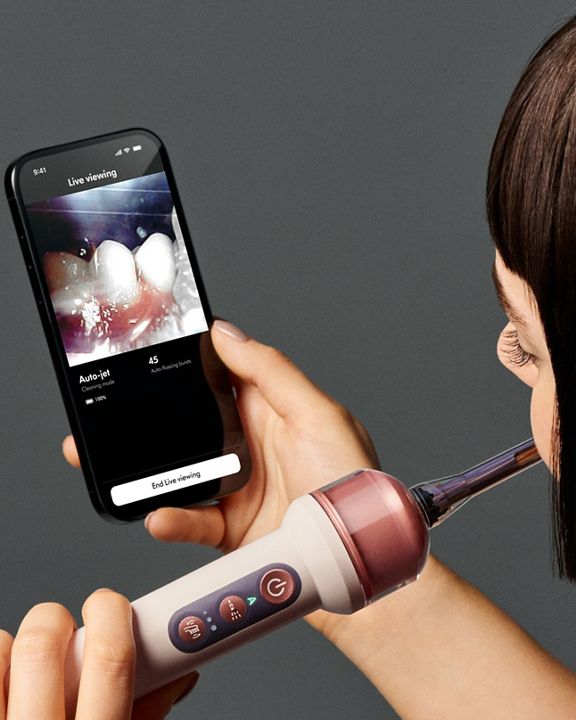
Our Chapter 8 case opener features Dyson, so I couldn’t pass this one up. James Dyson has a new product. It’s a toothbrush, it costs $499, and he says he has no idea how many he’ll sell.
A recent Wall Street Journal article, “James Dyson Sold Us on a $400 Hair Dryer. Now He’s Trying a $499 Toothbrush.“ introduces the Dyson CameraJet, a toothbrush that flosses while it brushes. A tiny camera in the brush head analyzes 28 images per second to detect gaps between teeth, then fires a cone-shaped burst of mouthrinse into each gap. Development took six years. This is new territory for a company built on moving air (vacuums, hair dryers, purifiers), so the engineers had to learn how to control liquid instead. The brush comes in pink and blue, sells through Sephora, Best Buy, and Amazon (with Costco to follow), and works with a special nonfoaming Dyson toothpaste. Dyson is walking into a large, crowded oral care market dominated by a handful of big companies.
Some of your students will remember is Dyson’s attitude. He told the Journal he didn’t know the size of the market, adding, “We don’t really structure things on a business plan.” The article reminds us that this approach has produced hits and misses. The bagless vacuum took 5,127 prototypes (our Chapter 8 opener tells that story). An electric car was announced in 2017 and dropped in 2019, and a washing machine proved too expensive to make, repair, and sell. Dyson owns 100 percent of a company with roughly $8.3 billion in annual revenue, so he answers to no outside shareholders. His view: if the toothbrush doesn’t work commercially, they’ll stop it.
That makes this a great new-product development story with a twist. Chapter 9 argues for an organized process with screening, ROI estimates, and gates that kill weak ideas early. Here is one of the most successful product innovators of our time telling a reporter he doesn’t bother with a business plan. I like putting that tension in front of students and letting them argue it out. There is a nice historical echo, too. Dyson launched its first hair dryer in 2016 at about $400, also at Sephora. People laughed at that price, and the Supersonic went on to redefine the category.
A first draft of this blog post was written by Claude.
Relevant Chapters in Essentials of Marketing
This article fits most naturally with Chapter 9 (New-Product Planning, An Organized New-Product Development Process, Managing Products over Their Life Cycles). The electric toothbrush category sits in market maturity, which shapes how a new brand has to compete. Students can classify the CameraJet as a continuous, dynamically continuous, or discontinuous innovation, and evaluate it against the characteristics that speed adoption (comparative advantage, ease of use, ease of communicating benefits, trialability, and compatibility). The $499 price also illustrates a skimming strategy during market introduction. It ties back to the Dyson opener in Chapter 8 (Technology, AI, and Intelligent Agents Add Value to Products; Branding Decisions; Achieving Brand Familiarity; Consumer Product Classes). The camera and AI gap detection are a textbook case of technology integrated into a “non-tech” product, and the toothbrush extends Dyson’s product assortment under a family brand that already enjoys plenty of brand evangelism. Instructors teaching opportunity analysis can use Chapter 2 (Types of Opportunities to Pursue; The Marketing Plan Guides Implementation and Control) to ask whether this is product development or diversification, and what role a marketing plan should play.
Class Discussion Ideas
The activities and questions below move from applying Chapter 9 concepts to a more open debate about whether Dyson’s “no business plan” approach is a smart strategy or a luxury of private ownership. The later questions ask students to take and defend a position, and several work well as online discussion prompts.
In-Class Activity Options
- Run the Gate. Put small groups in the role of a stage-gate review board at a large consumer products company. Using Exhibit 9-5, each group decides what it would need to know at each step (screening, idea evaluation, development) before letting the CameraJet move forward. Where might a traditional firm have killed this idea? Each group reports a go/kill vote and the one fact that drove it. (Chapter 9)
- Business Plan or Gut Instinct? Split the class into two debate teams. One argues that Dyson’s approach only works because he owns 100 percent of the company and can absorb failures like the electric car. The other argues that formal planning would have killed his best ideas, including the bagless vacuum. Close with a class vote and a short discussion of what a sensible middle ground looks like. (Chapters 2 and 9)
- Adoption Speed Check. Have students score the CameraJet from 1 to 5 on each of the five characteristics that speed adoption. For the lowest-scoring characteristic, they propose one marketing mix change to fix it (for example, a 60-day home trial or in-store demos at Sephora). This works well as a think-pair-share. (Chapter 9)
- What Kind of Product Is a Toothbrush? Most consumers treat a toothbrush as a staple convenience product. Ask students what product class Dyson needs the CameraJet to be, and why. Then compare Exhibit 8-9 with Dyson’s actual channel choices (Sephora, Best Buy, Amazon, Costco, and its own Demo Stores). Do the channels match the product class Dyson is aiming for? (Chapter 8)
- AI Concept Test. Students use a generative AI tool to draft a short concept-testing survey for the CameraJet aimed at a target market of their choosing. They then critique the AI’s draft: Which questions would produce useful answers? What did the AI miss? Groups share their best revised question with the class. (Chapter 9)
Discussion Questions and Instructor Notes
- Where is the electric toothbrush category in its product life cycle, and what does that mean for a new brand like Dyson? (Chapter 9)
- Answer: Electric toothbrushes are in market maturity, with established brands such as Oral-B and Philips Sonicare already competing hard. In maturity, sales level off and it is difficult to take share from established brands, so a newcomer needs a clear point of difference. Dyson is betting on a functional advantage (brushing and flossing in one step) rather than a lower price. Students should also recall that product life cycles describe categories, not brands; a strong brand can enter at any stage, much as Apple Music entered streaming during market growth.
- Is the CameraJet a continuous, dynamically continuous, or discontinuous innovation? Defend your answer. (Chapter 9)
- Answer: Most students will land on dynamically continuous. People still brush their teeth, but they must switch toothpaste, refill a mouthrinse tank, and perhaps use an app, and the product may replace their floss. That suggests promotion needs to clearly communicate benefits. A student could argue it is closer to discontinuous for people who never floss, since it adds a new behavior to their routine. Reward any well-reasoned answer that uses the textbook definitions.
- James Dyson says the company doesn’t “structure things on a business plan.” How does that fit with the organized new-product development process in the textbook? (Chapters 2 and 9)
- Answer: Dyson clearly follows a disciplined process on the product side: six years of development and, historically, thousands of prototypes. What appears to be missing is the market side, such as market sizing and ROI estimates at the screening step. The textbook’s stage-gate approach aims to kill weak ideas early, before big investments; the electric car was dropped only after it had been publicly announced, which is the costly kind of failure the process tries to avoid. Private ownership lets Dyson absorb those losses in a way a public company might not. Good answers recognize both the risk and the upside of trusting engineering instinct.
- The CameraJet puts a camera inside a customer’s mouth and connects to an app. What value does this technology add, and what concerns might customers have? (Chapter 8)
- Answer: The camera and AI let the product find gaps between teeth and floss them automatically, which is a real functional benefit and a strong example of technology added to a “non-tech” product. The app can also provide feedback on brushing habits. On the other hand, Chapter 8 notes that sellers get data too, and some customers find that creepy. Dyson says images are not stored on the device or in the cloud. Students should discuss why making that promise clearly and visibly matters for trust.
- How does the Dyson brand help the CameraJet, and where might the brand fall short? (Chapter 8)
- Answer: Dyson is a family brand with high brand familiarity, including many brand evangelists from products like the Airwrap. That reputation for premium engineering should speed trial and justify a high price. However, oral care is a health category where dentists’ opinions carry weight, and Dyson has no track record there. The company’s claim that the CameraJet removes much more plaque than competitors comes from its own testing, as The Next Web points out. Independent clinical evidence or dental endorsements may matter more than the brand name in this category.
- Dyson wants customers to use its own nonfoaming toothpaste with the CameraJet. Why might the company want customers buying related products, and what are the risks? (Chapter 8)
- Answer: Toothpaste, mouthrinse, and replacement brush heads extend Dyson’s product line and create repeat purchases long after the $499 sale. They also help make sure the product performs as designed, since foam can interfere with the camera. The risk is compatibility: customers who are loyal to a toothpaste brand may resist switching, and a required accessory can feel like a hidden cost. Students can debate whether this strengthens or weakens the overall value proposition.
- Is $499 a smart price for the CameraJet? Take a position and support it. (Chapters 8 and 9)
- Answer: Supporters will point to skimming during market introduction: a high price helps recover six years of development costs and signals premium quality, much like the roughly $400 Supersonic hair dryer did in 2016. For buyers who see it as a specialty product, price sensitivity is low. Critics will note that the top Oral-B and Sonicare models sell for about $400 to $430, and that a high price makes trial risky, which slows adoption. A strong answer considers which target market Dyson is pursuing and how quickly competitors could copy the technology.