
Tens of Millions of Squishy Dumplings: How a Small Toy Company Engineers Fads
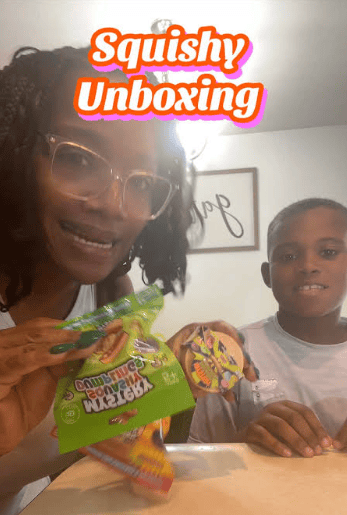
Thirteen-year-old Juliana set a camera on her kitchen table, closed her eyes, counted down from three, and lifted the lid off a little plastic steamer basket. Inside was a squishy dumpling — a rubbery, gel-filled toy with a smiley face — and hers turned out to be the rare blue glitter one. She posted the video. Her friends watched it, went to the store, and made videos of their own. Planet Money went looking for the business behind that moment (“What makes a toy go viral,” NPR, July 31, 2026; a full transcript is posted on the NPR site).
The company is RMS — Really Magical Stuff — and CEO Zack Farber walked through how it happened. He did not invent the squishy dumpling. A colleague spotted it in Yiwu, China, the open-market toy bazaar where RMS finds most of its products. Sold as-is beginning in 2020, it moved about 100,000 units and languished on shelves. In 2023, Farber added mystery: keep the cool basket, don’t say what color is inside. Sales more than doubled in a year. Then he added scarcity — limited series, one super-rare dumpling per series, drops at Five Below that sell out and don’t come back. Farber calls this “innovation with a small i.” “It doesn’t need to be the next big thing. It just needs to do something to turn the dial a little bit.” RMS sold millions of dumplings last year and tens of millions in the first half of this year. Toy analyst Kristen McLean says squishy toy sales are up 279 percent since January.
Two details make this worth class time. RMS paid nothing for the promotion that did the work — Farber’s team went online one day and found 500 million views of strangers unboxing their toy. And RMS holds zero U.S. inventory: production is scheduled a week at a time, factory straight to retailer. When Walmart offered to order a million units if RMS would warehouse 900,000 of them, Farber turned down the order. Meanwhile Juliana reports that the dumpling posts are “kind of dying down.” She has moved on to making sourdough.
Claude was used to write a first draft of this blog post.
Relevant Chapters in Essentials of Marketing
Chapter 9 (product life cycle, fads, fast-followers) is the anchor. The book defines a fad as an idea fashionable only to certain groups who are “so fickle that a fad is even shorter-lived than a regular fashion trend,” and its examples — Tamagotchi, Silly Bandz, Fidget Spinners — are the dumpling’s direct ancestors. Chapter 8 (packaging) is the second connection, and it is more specific than you might expect. Chapter 8 says packaging “promotes, protects, and enhances” the product, and Exhibit 8–8 lists “unboxing experience” as one of the ways it adds value, next to the Mejuri jewelry pouch. The steamer basket does that job twice: it improves the experience of getting the toy, and it manufactures the video. Chapter 16 covers what happens to that video — user-generated content, which the chapter treats as earned media, with the STEPPS box explaining why this reveal traveled. Chapter 11 is a useful fourth you might consider. Farber’s line that shoppers “get bored if they can’t find it” and “get bored if they can find it” is the customer service level trade-off, run backward.
Class Discussion Ideas
The productive angle here is that almost nothing about the squishy dumpling was new. The toy existed, the mystery-box model existed, and the scarcity model came from Beanie Babies. What Farber did was assemble them and build a supply chain that could survive the crash. Ask students to separate the parts of this success that were designed from the parts that were luck — and then ask what a marketing manager should do about a product that will probably be dead in a year.
In-Class Activities
Fad Autopsy. In small groups, have students pick a product they personally bought during a craze — Stanley cups, Prime energy drink, fidget spinners, Labubus. Each group plots the product on the four stages of the product life cycle, marks where it sits today, and identifies the single decision that most extended or shortened its run. Groups report the pattern they see across all four products. (Chapter 9)
Innovation with a Small i. Give each team an ordinary, cheap object — a bouncy ball, a keychain, a pad of sticky notes. Their assignment is Farber’s: don’t invent anything, just turn the dial. Add one current trend, one element of mystery, and one form of scarcity — then sketch the package it comes in and pitch the result in 60 seconds. Require each team to say which row of Exhibit 8–8 their package is working on. Have the class vote on which pitch they would actually buy. (Chapters 8 and 9)
Package the Reveal. Bring in three or four products students can open in class — a subscription-box item, a phone case in retail packaging, a bag of chips. In pairs, students open each one and rate the packaging on the two jobs the dumpling basket does: does it improve the product experience, and does it give the buyer something worth filming? Then have each pair redesign the weakest one so it does both. (Chapter 8)
The Walmart Meeting. Role-play in pairs. One student is the Walmart buyer who wants a million units with 900,000 warehoused by the supplier; the other is Farber, who would rather lose the order. Each pair negotiates for five minutes, then reports what they settled on and who had the leverage. Run it a second time with the premise that dumpling sales have fallen 40 percent, and watch the leverage move. (Chapter 11)
Discussion Questions (and Answer Ideas)
- Is the squishy dumpling a fad, or is it the leading product in a durable category? (Chapter 9)
- Answer: Chapter 9’s definition points to fad — enthusiastic but fickle buyers, a run measured in months, and the book’s own examples of Silly Bandz and fidget spinners. Juliana’s report that posts are “kind of dying down” looks like sales decline arriving on schedule. Students can reasonably argue the other side using McLean’s evidence: squishy and sensory toys as a category are up 279 percent, and she expects strength through the holidays. The best answers separate the two levels — the dumpling is a fad inside a category that may have a much longer life cycle.
- RMS did not create the squishy dumpling, the Pop It, or the reward chart. What does Chapter 9 call this strategy, and what does the chapter say about whether it works? (Chapter 9)
- Answer: This is the fast-follower strategy. The chapter states that pioneers are not always the winners — Google and Apple were not first to search or portable music players but responded quickly with better marketing mixes. Farber’s version is cheaper still, since the open-market toy in Yiwu has already proven the concept and RMS supplies only the tweak. The obvious cost is that nothing stops someone from doing the same thing to RMS, which is why Juliana can point to the RMS stamp on the bottom as the mark of a “real” one.
- The as-is dumpling sold about 100,000 units. Adding the mystery reveal more than doubled sales in a year without changing the toy at all. Where in the marketing mix did that change happen? (Chapters 8 and 9)
- Answer: Chapter 8 answers this directly. Packaging “promotes, protects, and enhances,” and Exhibit 8–8 names the unboxing experience as one of the ways packaging adds value — the same thing Mejuri does with a fabric pouch and a handwritten card. The gel toy is similar; the basket and the concealed color are the product change. Students may argue for Promotion instead, since the reveal pays off only when it is filmed and shared, and that is a defensible reading. Push them to notice the answer changes what a manager does next: a packaging answer says invest in the basket, a promotion answer says invest in making the reveal easier to film.
- Chapter 16 defines user-generated content as communication created by customers for other customers and classifies it as earned media. Why were 500 million views of unboxing videos worth more to RMS than 500 million paid impressions? (Chapter 16)
- Answer: The chapter reports that customers generally view earned and owned media as more credible and trustworthy than paid media, and that customers acquired through word-of-mouth are more loyal and have higher lifetime value. A stranger’s genuine gasp at a glitter dumpling carries evidence an ad cannot buy. The trade-off the chapter also names is control, and RMS has none. The same platform that made the dumpling can turn on it, and Farber has no way to order more enthusiasm.
- A package usually has to survive shipping and sell the product on a shelf. The dumpling basket has a third job. What is it, and what does that suggest about packaging decisions for any product students might manage? (Chapter 8, Chapter 16)
- Answer: The third job is generating earned media — the package is the reason there is anything to film. Chapter 8 treats packaging as promotion at the point of purchase; here it is also promotion after the purchase, in someone else’s feed. The practical implication is that packaging cost is no longer only a Product cost, since a basket that produces a video is doing work an ad budget would otherwise have to pay for. Students should be skeptical too: most packages do not produce videos, and designing for that outcome is a bet, not a plan.
- Farber says shoppers “get bored if they can’t find it” and “get bored if they can find it.” How does that compare with the customer service level trade-off in Chapter 11? (Chapter 11)
- Answer: Chapter 11 frames the decision as a balance — inventory and transportation costs rise with the service level, lost sales fall, and neither zero percent nor 100 percent makes economic sense. Farber is claiming something stronger: for a fad, some stockouts are an asset, because the chase is part of the product. Students should test that claim. Every empty shelf sends a buyer to the resale market, where RMS earns nothing, and a parent who strikes out at Five Below three times may quit rather than try again.
- Walmart was willing to order a million units if RMS warehoused 900,000. Farber said no. Was that the right call, and who should carry inventory in a channel like this one? (Chapter 11)
- Answer: Chapter 11 makes inventory carrying cost a real and measurable expense, and whoever holds the goods absorbs the obsolescence risk — which for a fad is close to total. Retailers push that risk upstream when they can. Farber’s week-by-week production schedule is what lets him refuse, and the outcome supports him: the big retailers came to him anyway. Students should notice how narrow that window is. He could say no only because demand was at its peak, and the same answer a year earlier would have cost RMS the shelf space.
- Juliana has moved on to sourdough. If you ran RMS, what would you do over the next six months? (Chapter 9, Chapter 16)
- Answer: Open-ended by design. Chapter 9 says fads can do well during a short cycle and then end, so defensible plans include harvesting the current run, launching the next tweak, or extending into an adjacent sensory toy. The strongest answers use the supply chain fact from the episode: because RMS holds no inventory, ending the run costs it very little, which makes an aggressive next bet cheaper for RMS than for a competitor sitting on a full warehouse.