
Archive for the ‘Product’ Category

New Product Development – For Pop Songs?

Posted by Joe Cannon

Brain researchers at Emory University have found that brain scans can help predict the future success of new music.  Oh what is the world coming to?  This would be fun to show as an example of market research or new product development.  It might be fun to ask students what they think of the approach?  The article “Songs Stick in Teens’ Heads” (Wall Street Journal, June 13, 2011, non-subscribers click here) and companion video should be of interest to our student — many of whom have an interest (if only as consumers) in the music industry. We have also posted this over at Learn the 4 Ps.

“Volkswagen Rediscovers America”

Posted by Joe Cannon

Volkswagen’s global market share is about 11% — but it sits at only 3% in the world’s largest auto market — the United States.  Volksagen’s managers hope to change that, so they are re-doubling marketing efforts.  This article, “Volkswagen Rediscovers America” (Bloomberg Businessweek, May 19, 2011), offers some insights into its strategy — but mostly gives a few interesting nuggets of information.  For example, I was surprised to read that as compared to its European counterpart, the U.S. Passat has more legroom, larger control buttons, and a better air conditioning system.  And the U.S. customer gets these extras for for a price of about $8000 courtesy of lower U.S. wages and simplified product design.  VW has just opened its first U.S. manufacturing plant since 1988.

The article offers some examples that can be used when you teach international marketing (product adaptation) and the local factory turns a weakness into a strength.

VW’s 2011 Super Bowl commercial (“The Force” see below)  was one of the most popular — though I must confess I was not a fan.  While I found the ad cute, I didn’t think it said anything relevant about the brand.

Brewers Differentiate With Innovative Packaging

Posted by Joe Cannon

We recognize that many instructors prefer not to use alcoholic products as in-class examples (and we keep them out of our books).  So we leave it up to you whether to use these creative examples in class.

The beer industry has recently come out with some very interesting packaging innovations.  This article, “Brewers Hope Consumers Will Judge a Beer By Its Cover” (AdvertisingAge, May 16, 2011 – I think that non-subscribers will be able to link to this article).  You can read about Coors Light bottles tell you when they are cold — and Miller Lite’s vortex bottles and nine other examples.  The article offers some brief critiques, suggesting “Why It Works” and “Why It Doesn’t” which might be useful discussion starters in class.  I could see a discussion of selected packaging innovations with a discussion about the appeal to target markets and consistency with positioning.

The examples could obviously be used when discussing product and packaging — but you could them as examples of differentiation.


“Puma Is No Longer a Sneaker. It’s a Lifestyle”

Posted by Joe Cannon

Many of my students are interested in and knowledgeable about the sports apparel and athletic shoe.  Surveys I conduct with my students consistently identify Nike as their favorite brand — far ahead of Apple.  So it pays to be up-to-date on this product-market — in this case about Nike competitor Puma.  It also makes for a good example to use in positioning.  The article, “Puma Is No Longer a Sneaker.  It’s a Lifestyle” (Bloomberg Businessweek, May 12, 2011) describes French luxury house PPR’s efforts to reposition the brand as high fashion.  Will the strategy work?  It might be useful to ask students why Puma is taking this approach.  Clearly there are strong competitors in Nike, Adidas, Reebok and Under Armour in this market — so it may make sense to try to differentiate Puma.  Also posted at Learn the 4 Ps.


“Brand Oprah Has Some Marketing Lessons”

Posted by Joe Cannon

Oprah Winfrey is a powerful brand and product endorser.  On May 25 Oprah ends her 25 year run on ABC and starting her own cable TV network — OWN = Oprah Winfrey Network.  This article “Brand Oprah Has Some Marketing Lessons” (Bloomberg Businessweek, May 19, 2011) touches on some of her brand power.

“Taco Bell and the Golden Age of Drive-Thru”

Posted by Joe Cannon

This long article looks at operational elements of the drive-thru window for quick-serve restaurants (QSRs). For many restaurants and especially for certain locations, the drive-thru is critical to business; at some Taco Bell locations 70% of the business was at the drive-thru window with 80% of that revenue coming in during a 90 minute lunchtime window! With this in mind, Taco Bell focuses on improving through-speed and quality of the drive-thru experience. This article, “Taco Bell and the Golden Age of Drive-Thru” (Bloomberg Businessweek, May 5, 2011) details many of those strategy changes.

The article provides a nice complement to the coverage of quality management in our text books — as well as our coverage of cross-functional collaboration (with production/operations) in Basic Marketing. Also posted at Learn the 4 Ps.

“In France, Tupperware Finds a Market”

Posted by Joe Cannon

Tupperware has been having great success in emerging markets — and in slowing mature economies like France where sales grew 17% last quarter and 19% in 2010.  This article, “In France, Tupperware Finds a Market” (Bloomberg Businessweek, May 5, 2011) describes some of the reasons for Tupperware’s success.  A higher end product line and changes in the traditional Tupperware party have helped the firm appeal better to a younger target market.  One of the bestsellers in France (and in the U.S.) is a $139 vegetable steamer (see picture to the left).  Also posted at Learn the 4 Ps.

Dilbert – Branding

Posted by Joe Cannon

I have been looking for a Dilbert to finish out the semester.  Why it pays for brand managers to have some understanding of the technology behind a product.  Also posted at Learn the 4 Ps.

Dilbert.com

“Starbucks Targets Folks Who Shun Starbucks”

Posted by Joe Cannon

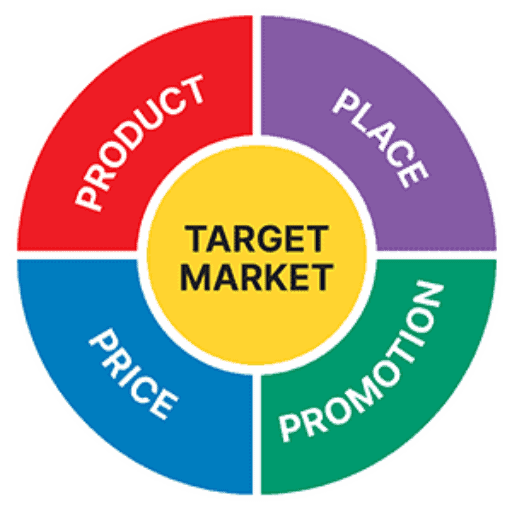
How does a dominant firm increase its customer base?  One tactic targets a new market with a new but related marketing mix.  Starbucks’ continues to look for growth — and is now looking for it from its Seattle’s Best brand that it acquired eight years ago.  This article “Starbucks Targets Folks Who Shun Starbucks” (Bloomberg BusinessWeek, April 21, 2011) gives some insights about product, price, promotion, and place elements for Seattle’s Best.

Here is a suggestion for using this article in class or as an assignment.  Since most of our students are familiar with Starbucks, it might be fun to draw a 3 column figure — with the left column headed with “Marketing Strategy,” followed by “Product,” “Place,” Promotion,” “Price,” and “Target Market.”  Then head each of the next two columns with “Seattle’s Best” and “Starbucks.”  You could let students break into teams to complete the picture – or simply ask students to fill in the cells on the figure you draw on the board.  I find that my students learn a lot from these types of compare and contrast in strategies.  To give students more insight into the perhaps less familiar Seattle’s Best brand, you could show one or more of the three ads in the video clip below.  Also posted at Learn the 4 Ps.

“How Carrots Became the New Junk Food”

Posted by Joe Cannon

Here is a great case study.  This article provides the basis for a nice story to tell in class or reading to assign.  What happens when the company that holds 40% of the carrot market brings in a former Coca Cola marketer to run the company?  Well, he conducts research and then brings on big name ad agency Crispin Porter + Bogusky.  Together they go after new ways to increase our consumption of the orange veggie — and not promoting its healthiness.   An interesting marketing tale is told in “How Carrots Became the New Junk Food” (Fast Company, March 22, 2011).  And the story is still being written — we don’t yet know if this strategy will work and sell more carrots.

The article will allow you to talk about consumer behavior, market research, positioning, branding, packaging, promotion, and advertising.  Good stuff — and a fun example, too.  Also posted at Learn the 4 Ps.